You’re texting back and forth, you ask something simple, and the reply comes back:
“ofcc 😂”
Not “ofc.” Not “of course.” An extra letter, just sitting there. You know it’s positive, probably, but you’re not 100% sure why there’s an extra C — or whether it’s being playful, sarcastic, or just a typo.
Here’s the quick answer, then the full picture.
What Does OFCC Mean?
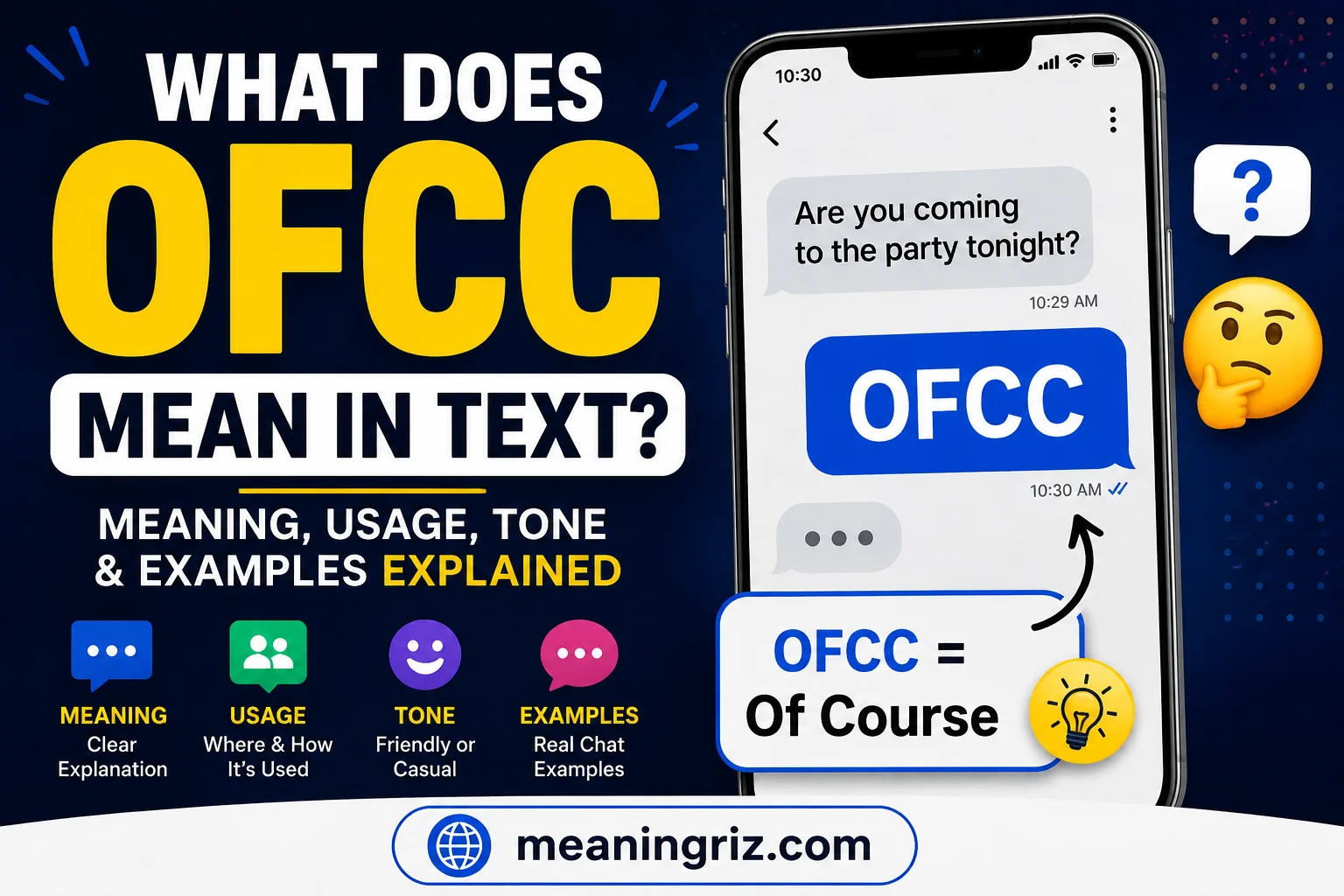
OFCC most commonly means “Of Course” — it’s a stretched-out, more expressive version of the shorter “OFC.” The extra C is added for emphasis, playfulness, or to make a simple “yes” feel more enthusiastic. In a smaller number of cases, OFCC is used as an exclamation of frustration (“oh, for crying out loud”) rather than agreement, so tone and context decide which one you’re looking at.
That’s the core answer. Now let’s get into why it shows up the way it does, and how to actually tell the two meanings apart in real conversations.
The Simple Meaning, Without the Guesswork
OFCC is built on top of an abbreviation you probably already know: OFC, short for “of course.”
Someone took that and added an extra letter. Doubling a letter in slang isn’t random — it’s a texting habit used to add weight to a word without typing more words. Think of how “so” becomes “soooo” or “yes” becomes “yessss.” OFCC works the same way. The extra C makes “of course” feel bigger, warmer, or more enthusiastic than the plain version.
So in plain English:
OFCC = “Of course,” said with extra enthusiasm or emphasis — usually a quick, friendly way to agree, confirm, or say yes in a casual chat.
That’s the part most searches are actually looking for. But there’s a second, less common meaning worth knowing too.
The Two Meanings of OFCC (And How to Tell Them Apart)
Most pages treat OFCC as having one fixed meaning. In practice, it splits into two directions depending on tone:
1. Agreement (the common one). “OFCC, I’ll be there.” This is OFC with extra energy — a yes that feels more excited or more certain than a plain “sure.”
2. Frustration (the less common one). “OFCC, the bus is late again.” Here it works like a sigh in text form — short for “oh, for crying out loud” or a softened version of a stronger exclamation. It’s venting, not agreeing.
The way to tell them apart isn’t the letters — it’s what comes around them. If OFCC follows a question or a request, it’s almost always agreement. If it follows a complaint or something annoying just happened, it’s almost always frustration. The word is identical. The sentence around it does all the work.
This is the detail most guides skip entirely, and it’s the one that actually prevents a wrong reply.
Real Chat Examples (How It Actually Looks)
Agreeing to Plans
Sam: dinner tonight? You: ofcc 🍝
Reads as warm, easy agreement — more enthusiastic than just texting “yes.”
Confirming Something Important
Jade: you’ll still help me move this weekend right? You: ofcc, wouldn’t miss it
Here the extra emphasis is doing real work — it’s reassuring someone, not just answering a casual question.
Venting in a Group Chat
“ofcc, my wifi just cut out mid-call”
No question came before it. This is frustration, not agreement — closer to “ugh, of course this happens.”
Light Teasing Between Friends
Friend: you’re always late lol You: ofcc i am, you know me 😂
Self-aware, joking agreement. The tone here is playful, not annoyed.
OFCC on Different Platforms
The meaning of OFCC doesn’t change by app — but how often you’ll see it, and how it’s typically used, does shift a bit.
OFCC on WhatsApp
Common in quick replies to confirm plans, errands, or simple yes/no questions. Almost always the “of course” version here.
OFCC on Instagram DMs and Comments
Often used to react to a question in a story, post, or comment thread — usually paired with an emoji to keep the tone light.
OFCC on TikTok
Shows up in comment replies agreeing with a video or a creator’s point, often stacked with other slang like “no cap” or “fr.”
OFCC on Snapchat
Tends to appear in quick back-and-forth chats rather than longer conversations — fits the platform’s fast, casual pace.
OFCC in Regular Texting (SMS/iMessage)
The most literal use — usually a direct, friendly “yes” to a plan or favor someone asked about.
When to Use OFCC (And When Not To)
When It Works Well
- Replying to a friend’s question or invite
- Confirming plans in a casual, upbeat way
- Adding warmth to a simple “yes” without writing more
When to Skip It
- Messaging a boss, client, teacher, or anyone in a formal setting
- The first message to someone you don’t know well
- A serious conversation where a casual tone could feel dismissive — for example, if someone is upset and asks “are you mad at me?”, replying “ofcc not” can come across as too light for the moment
A decent rule of thumb: if “totally!” would sound fine in that message, “ofcc” will usually land fine too. If “totally!” would feel out of place, so will this.
Is OFCC Rude?
Generally, no — it leans warm and agreeable by default.
It can feel slightly off if someone asks something serious and gets OFCC back with no other words attached, because the shorthand can read as low-effort even when affection was intended.
It can also feel sarcastic if it’s used right after something went wrong, since the frustration meaning (“oh, for crying out loud”) sits right next to the agreement meaning, and a reader who’s only familiar with one version might misread the other.
Between people who already text casually, it almost never reads as rude — it reads as relaxed and familiar, which is exactly the tone it’s meant to carry.
Why People Use This (Psychology)
There’s a reason doubled-letter slang like OFCC keeps spreading, beyond it just being trendy.
A plain “yes” can feel flat in text. Without tone of voice, a one-word answer can come across as cold even when it isn’t meant to. Stretching “of course” into “ofcc” adds a small burst of warmth that a flat “yes” doesn’t carry, without requiring more typing or more thought.
It signals comfort without saying it outright. People generally don’t use playful, stretched-out slang with someone they’re trying to impress or stay formal with. Seeing OFCC from someone is often a quiet signal that they feel relaxed enough around you to not bother with full words.
It softens commitment while still answering clearly. This is the part most explanations miss: OFCC technically gives a firm “yes,” but the playful spelling takes some of the weight off the answer. It lets someone agree enthusiastically without the reply feeling overly serious or formal — useful in conversations where a flat “yes, I will” might feel like too much commitment for a casual ask.
One real pattern worth noticing: OFCC tends to show up most in conversations between people who already have an established rhythm. Strangers and new acquaintances rarely open with it — it’s a sign the conversation has already settled into something familiar, not a starting point.
A Common Mistake People Make
The biggest misread is assuming OFCC always means agreement, even when it follows a complaint. Replying with a cheerful “yay, glad!” to someone who typed “ofcc, my package got lost again” misses the point entirely — they were venting, not celebrating. Read what came right before the word, not just the word itself.
OFCC vs. Similar Texting Slang
| Term | Meaning | Typical Tone | Emotional Undertone | Risk of Misreading | Best Used In |
|---|---|---|---|---|---|
| OFCC | Of course (or, less often, “ugh, of course”) | Warm, casual, sometimes frustrated | Enthusiasm or mild venting | Medium — depends entirely on context | Friends, casual confirmations, light venting |
| OFC | Of course | Casual, neutral | Simple agreement | Low | Quick confirmations, everyday replies |
| FR | For real | Casual, emphatic | Agreement, emphasis | Low | Backing up a statement someone made |
| NP | No problem | Casual, reassuring | Ease, willingness | Low | Responding to thanks or a small favor |
| SMH | Shaking my head | Casual, disapproving | Frustration, disbelief | Medium — can read as harsh if misjudged | Reacting to something annoying or silly |
The detail worth remembering: OFC is the neutral baseline. OFCC is the same word with the emotional volume turned up — either toward enthusiasm or toward frustration, depending on what it’s replying to.
How to Respond to “OFCC” (By Tone)
Friendly Reply
“Aww okay, see you then 😊”
Neutral / Practical Reply
“Got it, sounds good”
Playful Reply
“Look at you being so sure 😂”
Smart / Confident Reply
“Knew you would say that”
If OFCC came across as frustration rather than agreement, the better move is usually a short, sympathetic reply like “ugh, that’s annoying” rather than treating it as a cheerful yes — matching the actual tone gets the conversation back on track faster than matching the word.
Frequently Asked Questions
What Does OFCC Mean in a Text From a Girl or Guy?
The meaning doesn’t change based on who sends it — it’s still “of course,” just with extra warmth. From someone you’re close to, it usually signals comfort and easy familiarity rather than anything deeper.
Is OFCC the Same as OFC?
Almost. OFC is the plain, neutral version of “of course.” OFCC is the same word stretched for emphasis, which makes it feel more enthusiastic or, depending on context, more exasperated.
Is OFCC Always Positive?
No. Most of the time it signals friendly agreement, but it can also express mild frustration (“oh, for crying out loud”) when it follows a complaint instead of a question.
Can OFCC Be Used in a Professional Setting?
It’s best avoided. “Of course” or “Absolutely” reads cleaner in work emails or formal messages and avoids any risk of the message feeling too casual.
Does OFCC Mean Something Different on Snapchat or Instagram?
The core meaning stays the same across platforms. What changes slightly is pacing — on faster, more casual apps like Snapchat and TikTok, it tends to lean more playful than formal.
Why Do People Double Letters Like in OFCC Instead of Just Writing the Word Out?
It’s a quick way to add emotional emphasis without typing more. Doubling a letter is a common texting habit used to make a short word feel bigger or more expressive, the same way “yes” becomes “yessss” for extra enthusiasm.
The Bottom Line
OFCC almost always means “of course,” dressed up with a little extra emphasis. The one thing worth watching for is the rarer flip side — when it shows up after a complaint instead of a question, it’s venting, not agreeing. Once you’re reading the sentence around it instead of just the letters themselves, OFCC stops being confusing and starts being easy to read at a glance.
DISCOVER MORE ARTICLES
FWIW Meaning in Chat, Texting & Social Media
GMFU Meaning in Text Explained (Usage, Tone & Real Examples)
TB Meaning in Text Explained (Usage, Tone & Examples)
FWY Meaning in Text Explained (Usage, Tone & Real Examples)
DTM Meaning in Text Explained (Usage, Tone & Real Examples)

I’m the person behind this website, handling both the writing and content management myself. I focus on explaining word meanings, slang, and modern expressions in simple, clear language, using real-life examples so readers can understand how these terms are actually used in everyday conversations.