Someone texts you “dtm” after you send a paragraph explaining why you’re five minutes late, and suddenly you’re not sure if they’re laughing with you or quietly judging you.
That tiny three-letter reply can feel like a lot.
Here’s the short answer, then we’ll get into the part that actually matters: how to tell what someone really means when they send it.
What Does DTM Mean?
DTM most commonly means “Doing Too Much.” It’s used when someone is being extra, dramatic, overreacting, or putting way more effort into something than the situation actually needs.
It’s the texting version of someone saying “okay, relax” — but shorter, and often a little funnier.
DTM = “Doing Too Much” — a quick way to call out exaggerated, over-the-top, or overly dramatic behavior, usually in a teasing or lightly critical tone.
That’s the core meaning you’ll see most often. But DTM isn’t a one-meaning word, and that’s exactly where most people get tripped up.
The Simple Meaning, Without the Overthinking
At its root, DTM is calling out behavior that feels bigger than it needs to be.
The phrase “doing too much” has been used in everyday spoken English for years, especially in African American Vernacular English, long before it became a texting abbreviation. Social media just shortened it for speed.
So when someone sends “dtm,” they’re usually pointing at something specific: an overreaction, an overly long explanation, excessive effort, or behavior that feels performative rather than necessary.
It’s less of an insult and more of a nudge. Think “you didn’t need to do all that” — said in three letters instead of a full sentence.
But the Meaning Shifts Depending on Context
This is the part most explanations rush past. DTM doesn’t always mean the same thing, and reading it wrong can genuinely change how a conversation feels.
1. Doing Too Much (the main meaning). Someone sends a ten-text apology for being two minutes late, and the reply is “dtm lol.” This is calling out effort that wasn’t needed — almost always playful.
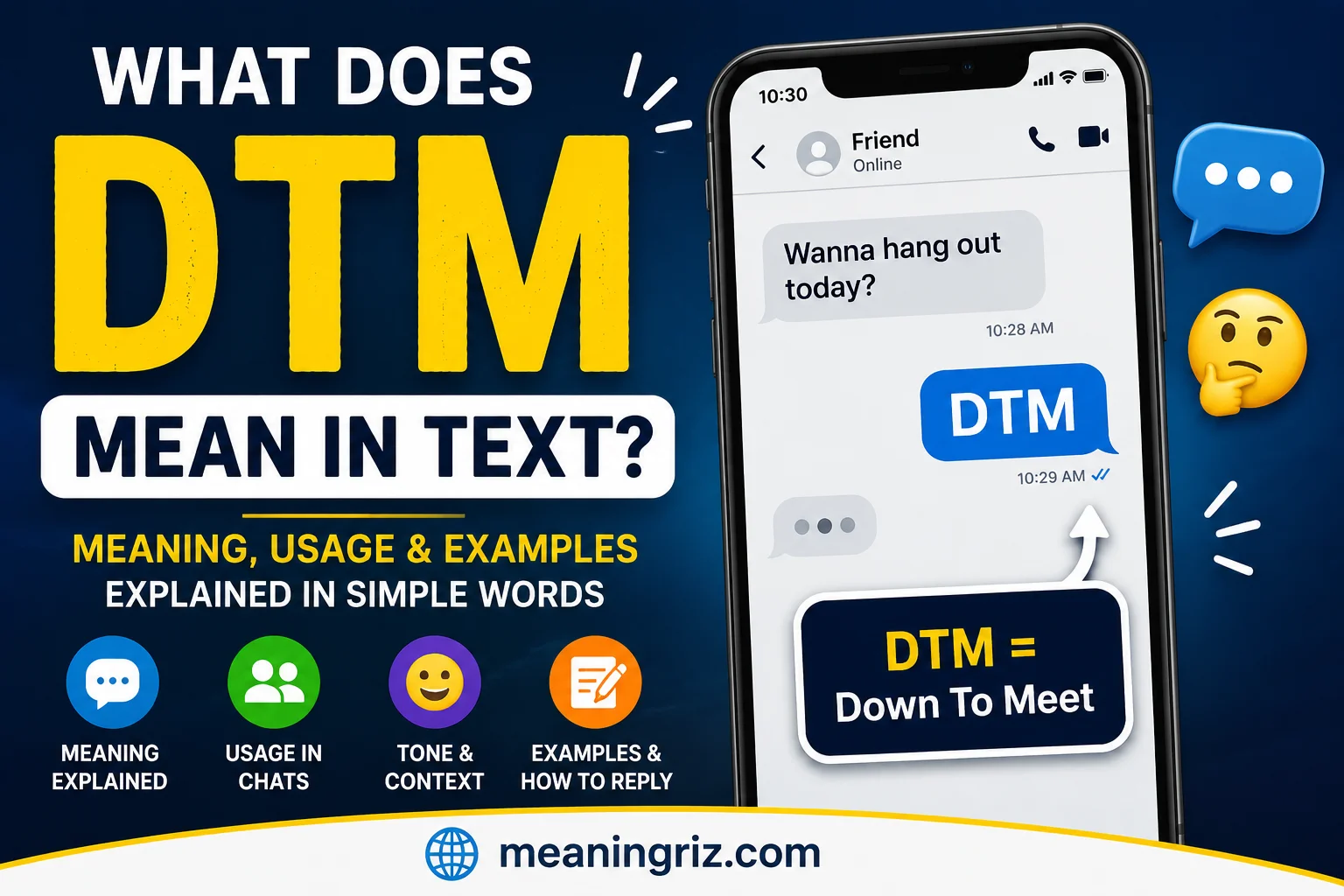
2. Down To Meet. In dating apps and casual “let’s hang out” conversations, DTM can mean someone is open to meeting up in person. “You free this weekend? I’m dtm if you are” has nothing to do with drama at all.
3. Less common regional or niche uses. A small number of people use DTM to mean “Don’t Text Me,” “Dead To Me,” or “Don’t Tell Me,” usually within a specific friend group or online community. These aren’t the standard meaning, but they exist, which is exactly why context matters more than the letters themselves.
Same three letters, three very different conversations. The way to tell them apart isn’t the word — it’s what was said right before it.
Real Chat Examples (How It Actually Looks)
Not the textbook version — the version that actually shows up on your screen.
After an Over-the-Top Apology
You: omg I’m SO sorry I’m late, traffic was insane, then I missed my exit, then— Friend: dtm 😭 just get here
In a Dating or Casual Hangout Chat
“wyd this weekend? I’m dtm if ur around”
Here, DTM means “down to meet,” not “doing too much.” Nothing dramatic about it.
Calling Out Dramatic Behavior in a Group Chat
“she texted him a 4 paragraph essay over a missed call… she’s so dtm”
This is the classic “doing too much” use — observational, a little gossipy, usually not meant to be cruel.
A Lighthearted Tease Between Close Friends
“you made a spreadsheet to plan a 2-day trip 💀 dtm”
Playful, affectionate even. The kind of DTM that means “I love how extra you are,” not “stop.”
Platform-by-Platform: Does DTM Change Meaning?
The meaning itself doesn’t shift by platform — but which meaning is more likely to show up does.
DTM on Snapchat and Instagram
Mostly “doing too much,” used to react to someone’s story, post, or caption that feels overly dramatic or extra.
DTM on TikTok
Almost always “doing too much,” frequently used in comments to playfully call out a creator’s over-the-top reaction or effort in a video.
DTM on Dating Apps (Tinder, Bumble, Hinge)
Far more likely to mean “down to meet.” In a dating context, it’s about willingness to actually meet up, not about behavior.
DTM in Regular Texting (SMS/iMessage)
Usually “doing too much,” typically between people who already know each other well enough to tease one another.
DTM in Gaming Chats
Occasionally used as a quick “don’t text me” during intense gameplay, though this is a smaller, more situational use than the main meaning.
The platform is a clue, not a guarantee. The conversation right before the DTM is still the strongest signal.
When to Use DTM (And When Not To)
When It’s Fine to Use
- You’re teasing a close friend about something genuinely over-the-top
- The tone of the conversation is already light and joking
- You want to call out drama without starting an argument
When to Avoid It
- The other person is genuinely upset, stressed, or venting about something real
- You’re talking to someone in a formal or professional context
- You don’t know the person well enough for teasing to land as friendly
A simple way to check yourself before sending it: if what the person just said came from real stress or real emotion, “dtm” can feel dismissive instead of funny. Save it for the genuinely over-the-top moments, not the vulnerable ones.
Is DTM Rude?
Usually not — but it depends entirely on timing and relationship.
It feels playful and harmless when it’s responding to something that was clearly exaggerated for effect, like a dramatic complaint about a minor inconvenience.
It can feel dismissive or even hurtful if it’s sent in response to something the other person actually meant seriously. Calling someone’s real feelings “doing too much” can land as “you’re overreacting,” which stings differently than teasing them about a long apology text.
It’s almost never rude between people who already joke around like this regularly, because both sides already understand the tone behind it.
Why People Use This (Psychology)
There’s more going on with DTM than just calling out drama.
It lets people set a boundary without sounding harsh. Saying “you’re overreacting” out loud can sound confrontational. “Dtm” does the same job with way less weight, which is part of why it caught on so widely — it softens a correction into a joke.
It’s often a form of affection disguised as criticism. A lot of “dtm” texts aren’t actually trying to shut someone down. They’re a way of saying “I see you, and you’re being a lot right now, and it’s kind of endearing.” The tone matters more than the words.
It reflects how comfortable people are with directness. Younger texting culture leans toward calling things out quickly and lightly rather than tiptoeing around them. DTM is a small example of a bigger shift — people increasingly use short, blunt slang specifically because it avoids the heaviness of a full sentence.
One real observation worth noting: people rarely send “dtm” to someone they’re not already comfortable with. The slang itself is a quiet signal of familiarity — using it on a stranger or new acquaintance almost always reads as more dismissive than the sender intended.
A Common Mistake People Make
The biggest misread is assuming DTM always means “doing too much,” even in contexts where it clearly doesn’t fit — like dating conversations where it’s actually about meeting up. The second most common mistake is using it on someone who’s genuinely upset, when it was only ever meant for exaggerated, low-stakes drama. Read the emotional weight of the message before the DTM, not just the DTM itself.
DTM vs. Similar Texting Slang
People often confuse DTM with terms that look or sound similar but mean something completely different.
| Term | Meaning | Typical Tone | Emotional Undertone | Risk of Misreading | Best Used In |
|---|---|---|---|---|---|
| DTM | Doing Too Much / Down To Meet | Playful or practical, depending on context | Teasing, affection, or casual interest | High — two very different core meanings | Friend group teasing, dating/hangout plans |
| DTF | Down to Flirt/hook up | Flirty, suggestive | Romantic or sexual interest | High — easily misread if sent to the wrong person | Dating apps, established flirty dynamics |
| DM | Direct Message | Neutral | None inherently | Low | Asking someone to message privately |
| SMH | Shaking My Head | Disapproving, exasperated | Frustration or disbelief | Low | Reacting to something disappointing |
| IMO | In My Opinion | Neutral, clarifying | None inherently | Low | Softening a personal opinion |
The mix-up that causes the most confusion: DTM and DTF look similar at a glance but mean completely different things. Sending the wrong one to the wrong person is a classic, slightly embarrassing texting mistake.
How to Respond to “DTM” (By Tone)
Friendly Reply
“lol I know, I know, I’m working on it”
Neutral / Practical Reply
“fair enough 😅”
Playful Reply
“I contain multitudes”
Smart / Confident Reply
“say less, but also no I will not be doing less”
The pattern across all of these: leaning into the tease usually keeps the conversation light, while getting defensive about it tends to make a harmless joke feel more serious than it was meant to be.
Frequently Asked Questions
What Does DTM Mean in a Text From a Girl or Guy?
The meaning doesn’t change based on who sends it. In friend group texts, it almost always means “doing too much.” In dating conversations, it more often means “down to meet.”
Is DTM the Same as DTF?
No, and mixing them up is one of the most common texting mistakes. DTM usually means “doing too much” or “down to meet,” while DTF refers to romantic or sexual interest. They’re easy to confuse at a glance but mean very different things.
Is It Rude to Call Someone DTM?
Not usually, as long as it’s responding to something genuinely exaggerated or dramatic. It can feel rude if it’s used to dismiss someone’s real feelings or a serious situation.
Does DTM Mean Something Different on Dating Apps?
Yes. On apps like Tinder, Bumble, or Hinge, DTM is far more likely to mean “down to meet” — expressing willingness to meet up in person — rather than calling out dramatic behavior.
Can DTM Be Used in a Professional Setting?
No, it’s best left out of work or formal conversations entirely. It’s casual slang, and its multiple meanings make it easy to misread in a setting where tone is already harder to read.
Why Does DTM Have So Many Different Meanings?
Because it started as a shortened version of “doing too much” and spread quickly across different online communities, each group adapted it slightly differently — which is also why context matters more than the abbreviation itself.
The Bottom Line
DTM most often means “doing too much” — a quick, usually playful way to call out drama or excessive effort. But context can shift it toward “down to meet” in dating chats, or toward rarer meanings in specific friend groups. The letters alone won’t tell you which one you’re dealing with — the conversation around them will.
DISCOVER MORE ARTICLES
FWIW Meaning in Chat, Texting & Social Media
GMFU Meaning in Text Explained (Usage, Tone & Real Examples)
TB Meaning in Text Explained (Usage, Tone & Examples)
FWY Meaning in Text Explained (Usage, Tone & Real Examples)

I’m the person behind this website, handling both the writing and content management myself. I focus on explaining word meanings, slang, and modern expressions in simple, clear language, using real-life examples so readers can understand how these terms are actually used in everyday conversations.