You’re scrolling through a group chat, everything feels normal, and then someone replies with:
“gmfu.”
Four letters. No explanation. And depending on what was just said, it could mean they’re laughing, or it could mean they’re genuinely upset. That gap is exactly why this term confuses people.
Here’s the direct answer, then we’ll get into the part that actually matters — reading the tone correctly.
What Does GMFU Mean?
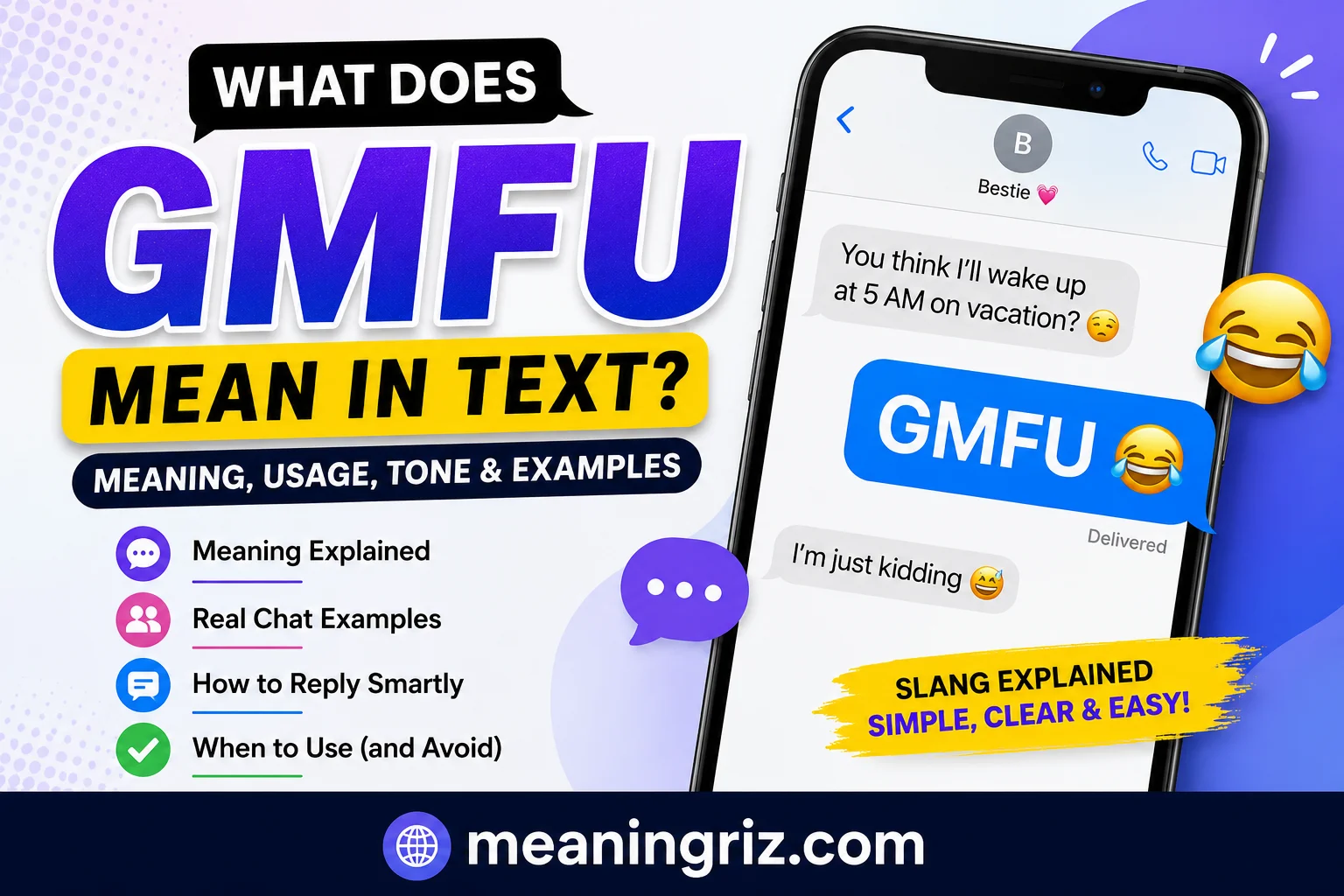
GMFU stands for “Got Me F*ed Up.”** It’s a slang phrase people use to express strong emotion — usually shock, disbelief, frustration, or the feeling that something is unfair or disrespectful. The exact intensity changes depending on tone, but the emotional charge is always there.
GMFU = “Got Me F*ed Up”** — a slang reaction used to express shock, anger, or disbelief, often when someone feels disrespected or thinks a situation is unacceptable.
It’s worth saying clearly upfront: this one carries a censored swear word inside it. That’s not a small detail — it changes who you can say it to and where it’s appropriate, more than most slang on this list.
The Simple Meaning, Without the Overthinking
At its core, GMFU is an emotional reaction, not a question or a greeting. It’s the texting version of saying “are you serious right now?” out loud.
It comes from African American Vernacular English (AAVE), where expressive, rhythmic phrases like “got me f***ed up” have been used in speech for a long time to mean someone has overstepped, lied, or done something hard to believe. Texting culture shortened it into an acronym the same way it did with WTF or SMH.
So when someone types GMFU, they’re not asking anything. They’re reacting.
But the Meaning Shifts Depending on Tone
This is the part that trips people up the most, and it’s worth slowing down on.
1. Genuine anger or offense. Someone feels disrespected, lied to, or treated unfairly, and GMFU is the short version of “that is not okay.”
2. Disbelief, not anger. Sometimes there’s no hostility at all — just pure “I cannot believe what I just heard.” The emotion is shock, not aggression.
3. Playful exaggeration between friends. Close friends often use GMFU the way you’d dramatically gasp at something minor — “you ate my snacks?? gmfu 😭” — where the swear word’s edge is basically removed by the relationship.
4. Mock outrage as a joke format. On social media especially, GMFU sometimes shows up as a bit — reacting to something absurd or funny, not something that actually upset anyone.
Same four letters, four very different emotional temperatures. The text alone won’t tell you which one it is — the relationship and what came right before it will.
Real Chat Examples (How It Actually Looks)
Not textbook examples — the kind that actually show up in real conversations.
A Genuine Reaction to Bad News
A: “they raised the rent again” B: “gmfu, that’s actually wild”
This reads as real frustration, aimed at the situation, not at the other person.
Friends Joking Around
Friend 1: “bro I ate your snacks” Friend 2: “GMFU 😭 we’re not friends anymore”
Here the swearing is doing comedic work, not angry work. The crying-laughing emoji is doing most of the tone-setting.
A Sharper, More Serious Use
“you told them what I said in private? gmfu”
No emoji, no punctuation softening it. This version reads as actual hurt or betrayal, not a joke.
Reacting to Something Online
Comment under a video: “the price they’re charging for this?? gmfu”
This is closer to public disbelief — venting at a situation, not at a specific person in the conversation.
Platform-by-Platform: Does GMFU Change Meaning?
The core meaning doesn’t change across platforms, but the register — how seriously it should be read — shifts a bit depending on where it shows up.
GMFU on TikTok
Often used in comments and captions as a reaction to something shocking, unfair, or funny. The tone here leans more performative and less personal.
GMFU on Instagram
Shows up in captions, comments, and DMs to express disbelief about a post, trend, or situation. Similar register to TikTok — public reactions tend to be lighter.
GMFU on Snapchat
More common in private snaps or direct chats, reacting to something annoying or unfair that happened in someone’s actual day. This version tends to feel more personal.
GMFU in Regular Texting (SMS/iMessage)
This is usually the most emotionally real version — between two people who know each other, reacting to something specific that just happened between them.
The pattern: public platforms (TikTok, Instagram comments) trend lighter and more performative. Private chats (Snapchat, SMS) trend more personal and emotionally genuine.
When to Use GMFU (And When Not To)
When It’s Fine to Use
- Texting close friends who already use this kind of language
- Reacting to something genuinely surprising or unfair in a casual setting
- Joking around in a group chat where everyone’s tone is already playful
When to Avoid It
- Messaging a boss, teacher, client, or anyone in a formal relationship
- Talking to someone you don’t know well, since the profanity can land harder than intended
- Any conversation where you’re trying to de-escalate, not escalate, an emotional moment
A useful gut-check: if you wouldn’t say the uncensored version of this phrase out loud to this person’s face, don’t text the censored version either. The asterisk softens the spelling, not the emotional weight behind it.
Is GMFU Rude?
It can be, and that’s part of the appeal for the people who use it — the mild profanity gives the reaction more punch than a neutral phrase would.
It reads as genuinely rude or aggressive when there’s no emoji, no softening, and it’s aimed at a specific person who’s still in the conversation. Stripped of any humor signal, it functions almost like a verbal jab.
It reads as harmless or even funny between close friends, especially paired with a laughing emoji or used over something low-stakes like food or plans. The relationship absorbs the edge of the word.
It’s rarely a good idea with strangers or acquaintances, because you don’t yet share the context that tells them which version you mean.
Why People Use This (Psychology)
There’s a reason phrases like this catch on instead of people just typing “I’m upset” or “I don’t believe that.”
Profanity-adjacent slang compresses big emotion into a small space. Typing “I genuinely cannot believe you just said that to me” takes effort and feels like you’re building a case. “Gmfu” delivers the same emotional payload in four characters, which matches how fast digital conversations move.
Censoring the word with letters instead of writing it out softens the delivery while keeping the intensity. This is a subtle thing people do instinctively — using the acronym instead of the full phrase lets the sender express real frustration without it feeling like a direct attack, because there’s a small buffer of abbreviation between the feeling and the words.
It signals “this affected me” without requiring vulnerability. Saying “that really hurt my feelings” exposes you. Saying “gmfu” expresses the same thing but wrapped in slang, which feels safer to send, especially to people you’re not fully emotionally open with yet.
One real observation worth noting: GMFU shows up disproportionately often in conversations where someone feels unheard rather than just annoyed. It tends to follow a moment where the other person dismissed, joked about, or didn’t take seriously something the sender actually cared about. The slang is doing the work of saying “no, actually, this mattered to me” without saying that directly.
A Common Mistake People Make
The biggest misread is assuming GMFU always signals real anger directed at you. Often it’s directed at a situation, a third party, or even just expressing disbelief at something absurd — and responding defensively to a joking “gmfu” can escalate a moment that was never actually serious. Check for emoji, punctuation, and what was said right before it before reacting.
GMFU vs. Similar Texting Slang
People often lump GMFU in with other reaction-based abbreviations, but each one carries a different emotional weight.
| Term | Meaning | Typical Tone | Emotional Undertone | Risk of Misreading | Best Used In |
|---|---|---|---|---|---|
| GMFU | Got me f***ed up | Strong, emotionally charged | Shock, anger, disbelief, or feeling disrespected | High — easy to misread as aimed at the reader | Close friends, venting, reacting to something unfair |
| WTF | What the f*** | Blunt, surprised | Confusion or disbelief | Medium | Casual reactions to anything unexpected |
| SMH | Shaking my head | Disappointed, dismissive | Mild frustration or disapproval | Low | Reacting to something disappointing, not infuriating |
| FML | F*** my life | Self-directed, exasperated | Personal frustration or bad luck | Low | Venting about your own situation, not someone else’s actions |
| IDGAF | I don’t give a f*** | Dismissive, detached | Indifference or defiance | Medium | Shutting down a topic or showing you don’t care |
The key difference worth remembering: GMFU is reactive and other-directed — it’s almost always responding to something someone else said or did. FML, by comparison, is self-directed venting about your own circumstances. GMFU points outward; FML points inward.
How to Respond to “GMFU” (By Tone)
Friendly / De-escalating Reply
“Lol okay what happened, talk to me”
Neutral / Practical Reply
“Yeah that’s pretty unfair, I get it”
Playful Reply
“GMFU?? over what 😭”
Smart / Confident Reply
“Fair reaction honestly, I’d be annoyed too”
The pattern across these: a good reply acknowledges the emotion first instead of getting defensive, even if you’re not sure yet whether they’re joking or genuinely upset. That one move — validating before clarifying — almost always de-escalates if it does turn out to be real frustration.
Frequently Asked Questions
What Does GMFU Mean in a Text From a Girl or Guy?
The meaning doesn’t change based on who sends it — it’s still “got me f***ed up.” What shifts is context: from someone you’re close with, it often signals genuine frustration or disbelief about a specific situation, not random anger.
Is GMFU Always About Anger?
No. It frequently expresses shock or disbelief rather than anger. The tone — emojis, punctuation, what was said right before — is what tells you which one it is.
Is It Okay to Use GMFU at Work or in Formal Chats?
No. It contains implied profanity and a strong emotional charge, both of which read as unprofessional in formal or work settings. Stick to plain language there.
Does GMFU Mean Something Different on Snapchat or TikTok?
The core meaning stays the same everywhere. What changes is the register — TikTok and Instagram versions tend to be more performative and public, while Snapchat and direct texts tend to be more personal and genuine.
Is GMFU the Same as WTF?
Not quite. WTF usually signals confusion or surprise. GMFU carries a stronger emotional charge and often implies the sender feels personally disrespected or wronged, not just confused.
Where Did GMFU Come From?
It traces back to African American Vernacular English (AAVE), where the full phrase has long been used to express being deeply affected by something unfair or unbelievable. Texting culture shortened it into the acronym for faster typing.
The Bottom Line
GMFU means “got me f***ed up” — a slang reaction to shock, disbelief, or feeling disrespected. The real skill isn’t memorizing the definition, it’s reading the tone around it: an emoji, a joke right before it, or the relationship you have with the sender tells you whether you’re looking at real frustration or just dramatic flair. Once you start checking for that context automatically, the four letters stop feeling confusing and start feeling easy to read.
DISCOVER MORE ARTICLES
What Does PMO Mean in Text? (Usage, Tone & Examples)
What Does LCL Stand for in Chat? Explained Simply
FWIW Meaning in Chat, Texting & Social Media
WYA Meaning in Text Explained (Usage, Tone & Real Examples)

I’m the person behind this website, handling both the writing and content management myself. I focus on explaining word meanings, slang, and modern expressions in simple, clear language, using real-life examples so readers can understand how these terms are actually used in everyday conversations.