Have you ever received a message that said “Courtesy reminder”, “Courtesy of John”, or simply included the word “courtesy” and wondered what the sender actually meant?
You’re not alone. The word courtesy can seem simple, but its meaning changes depending on the conversation. In a text message, it can express politeness, give credit to someone, soften a reminder, or even sound sarcastic if used with the wrong tone.
If you’re searching for what does courtesy meaning in text, this guide explains it in plain English with real-life examples, emotional context, and practical tips.
What Does Courtesy Mean in Text?
Featured Snippet Answer
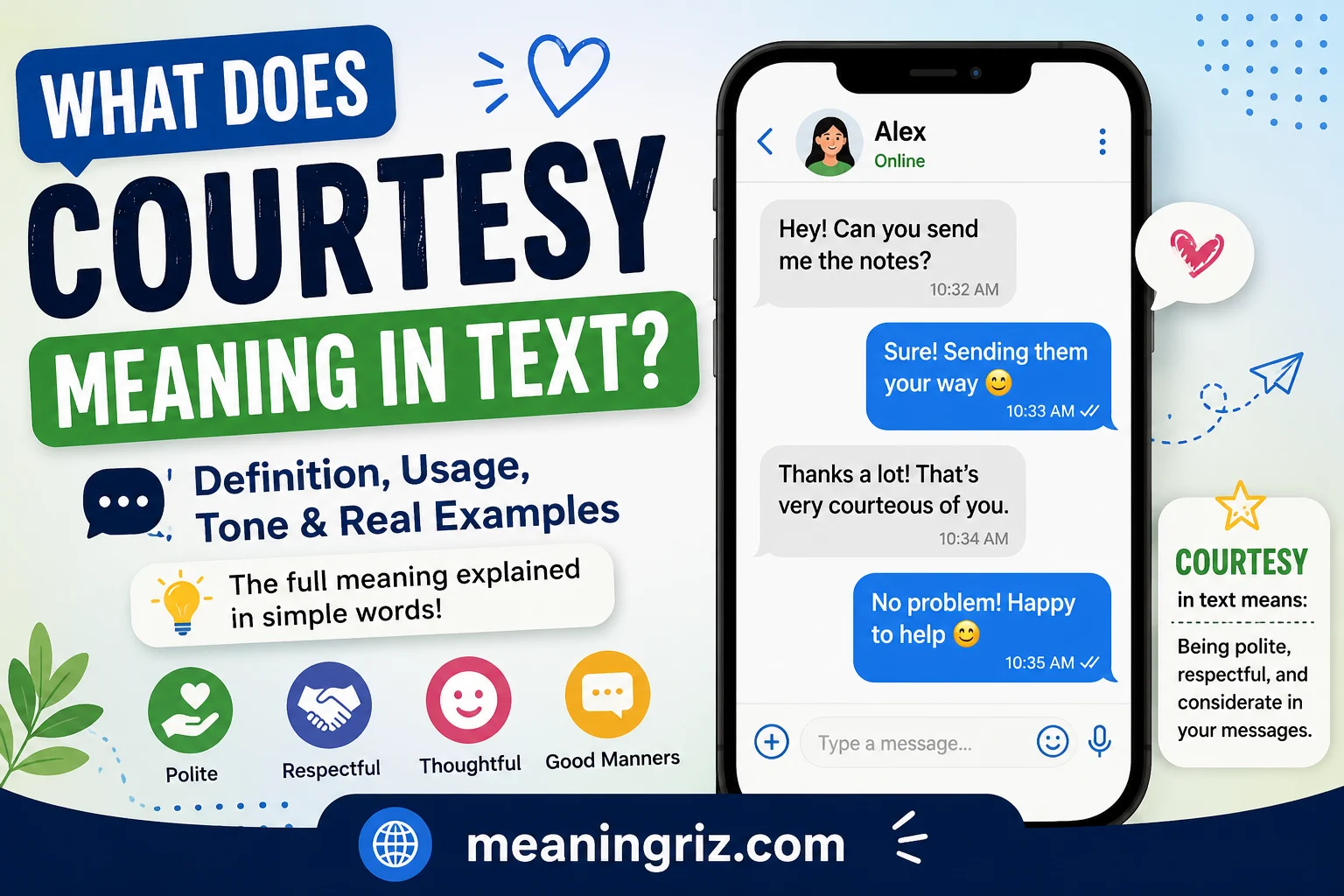
Courtesy meaning in text usually refers to being polite, respectful, or considerate toward someone. In texting and online conversations, it can also mean giving credit (“courtesy of”), sending a polite reminder (“courtesy reminder”), or using a respectful tone. The exact meaning depends on the context and how the message is written.
The Simple Meaning of Courtesy
At its core, courtesy means showing good manners, kindness, and respect toward another person.
In everyday texting, people rarely use the word by itself. Instead, you’ll often see it in common phrases such as:
- Courtesy reminder
- Courtesy of…
- As a courtesy
- Out of courtesy
- Common courtesy
Each phrase has a slightly different meaning.
Courtesy Meaning in Text Messages
When someone uses courtesy in a text, they’re usually trying to sound polite rather than demanding.
For example:
Manager:
Courtesy reminder: Please submit your report by 5 PM.
Meaning:
“I’m reminding you politely instead of ordering you.”
The word makes the message sound friendlier and more respectful.
Courtesy of Meaning in Text
One of the most common uses is “courtesy of.”
It means:
- Thanks to
- Provided by
- Because of
- Given by
Examples
Lunch courtesy of the company.
Meaning:
The company paid for lunch.
New bruise… courtesy of my little brother.
Meaning:
My little brother caused it.
This second example is often humorous rather than serious.
Courtesy Reminder Meaning in Chat
You’ll often see courtesy reminder in:
- Work chats
- School groups
- WhatsApp communities
- Email messages
- Team communication
Example:
Courtesy reminder: Tomorrow’s meeting starts at 9 AM.
This isn’t a warning.
It’s simply a polite reminder meant to help people remember.
In real conversations, many managers use this phrase because it sounds cooperative instead of bossy.
Courtesy Meaning on Different Platforms
On WhatsApp, courtesy usually appears in family groups, work chats, or community announcements.
Example:
Courtesy reminder: Don’t forget Sunday’s event.
Tone:
Friendly and respectful.
You’ll mostly see courtesy of in captions.
Example:
Amazing sunset, courtesy of Mother Nature.
Meaning:
Nature deserves the credit.
TikTok
TikTok creators often use the phrase humorously.
Example:
Sleep schedule destroyed—courtesy of Netflix.
Meaning:
Netflix is jokingly responsible.
On Facebook, courtesy often appears when sharing photos or news.
Example:
Photo courtesy of Sarah.
Meaning:
Sarah provided the photo.
X (formerly Twitter)
People commonly write:
Anxiety courtesy of Monday morning meetings.
This is internet humor.
The writer is joking that Monday caused their stress.
Does Courtesy Always Mean Someone Is Being Polite?
Not always.
Most of the time, yes.
But the same word can become sarcastic depending on the situation.
Compare these examples.
Genuine
Courtesy reminder: Your package arrives tomorrow.
Helpful.
Friendly.
Respectful.
Sarcastic
Oh sure… courtesy of your excellent driving.
Meaning:
The speaker actually blames the other person.
The words stay the same, but the tone completely changes.
How People Actually Use Courtesy Today
In real conversations, people rarely type:
“Please show courtesy.”
Instead, they naturally use phrases like:
- Courtesy reminder
- Courtesy of…
- Out of courtesy
- It’s just common courtesy
Most people use these expressions without thinking about the dictionary definition.
They’re simply trying to sound polite or explain why something happened.
Real Chat Examples
Example 1
Emma:
Courtesy reminder—your dentist appointment is tomorrow.
Meaning:
A friendly reminder.
Example 2
Alex:
This coffee is courtesy of my boss.
Meaning:
The boss paid for it.
Example 3
Jake:
My headache is courtesy of staying up until 3 AM.
Meaning:
He’s joking that staying awake caused the headache.
Example 4
Friend:
Thanks for waiting.
You:
Just common courtesy.
Meaning:
Waiting was simply the polite thing to do.
When Should You Use Courtesy?
The word fits naturally when you want to:
- Sound respectful
- Give someone credit
- Send a gentle reminder
- Explain who provided something
- Make a lighthearted joke
It works especially well in professional communication because it softens requests.
When Should You Avoid Using Courtesy?
Avoid using it if:
- Very simple wording is better.
- The audience may not understand the phrase.
- You’re trying to sound casual with close friends.
Instead of saying:
Courtesy reminder…
A friend might simply text:
Just a reminder!
Both are correct.
The second sounds more relaxed.
Why People Use This (Psychology)
People generally prefer messages that feel respectful rather than demanding.
Adding the word courtesy reduces pressure.
Compare these two messages.
Submit your documents today.
vs.
Courtesy reminder: Please submit your documents today.
The second feels much friendlier, even though the request is exactly the same.
In psychology, people are often more receptive when they don’t feel they’re being ordered around.
That’s one reason businesses, schools, and workplaces frequently use this wording.
A Communication Insight Most People Miss
The phrase courtesy reminder doesn’t only remind people.
It also protects the sender.
By calling it a courtesy reminder, the sender subtly communicates:
“I’m helping you remember.”
instead of
“You forgot.”
That small difference makes conversations smoother and reduces defensiveness.
A Common Mistake
Many people think courtesy always means “please.”
It doesn’t.
The word can mean:
- politeness
- respect
- giving credit
- providing something
- explaining who caused something
Understanding the surrounding words is more important than focusing on the single word.
A Deeper Emotional Insight
When someone says:
“Out of courtesy…”
they’re often telling you they acted respectfully—even if they didn’t have to.
The phrase carries an emotional message:
“I chose kindness.”
Likewise, when someone says:
“Courtesy of my kids…”
they’re usually inviting you to laugh with them rather than placing blame.
That’s why context is so important in modern communication.
Courtesy vs Similar Expressions
| Expression | Meaning | Tone | Emotion | Risk Level | Best Used In |
|---|---|---|---|---|---|
| Courtesy | Politeness and respect | Friendly | Respectful | Very Low | General conversation |
| Courtesy reminder | Gentle reminder | Professional | Helpful | Very Low | Work, school, groups |
| Courtesy of | Thanks to or provided by | Neutral to playful | Appreciative or humorous | Very Low | Texts, captions, memes |
| Common courtesy | Basic good manners | Neutral | Respectful | Low | Advice or discussion |
| Just a reminder | Reminder without “courtesy” | Casual | Friendly | Very Low | Friends and family |
How to Respond When Someone Uses Courtesy
Friendly Responses
- “Thanks for the reminder!”
- “I appreciate it.”
- “Good looking out.”
Neutral Responses
- “Got it.”
- “Thanks.”
- “I’ll take care of it.”
Playful Responses
- “The courtesy is appreciated!”
- “Saved me from forgetting again.”
- “You’re my favorite reminder service.”
Smart or Professional Responses
- “Thank you for the courtesy reminder.”
- “I appreciate the update.”
- “Thanks for keeping everyone informed.”
Cultural Differences
In many English-speaking workplaces, using words like courtesy, kindly, and please is considered professional and respectful.
On social media, however, courtesy of is often used humorously.
Example:
Bad haircut… courtesy of my cousin.
Nobody thinks the cousin officially “provided” the haircut.
Instead, it’s a playful way of saying the cousin caused it.
Understanding these differences helps avoid misunderstandings.
Frequently Asked Questions
What does courtesy mean in a text message?
It usually means being polite, respectful, or considerate. It can also give credit to someone or introduce a friendly reminder.
What does courtesy of mean in texting?
It means “provided by,” “thanks to,” or sometimes “caused by,” depending on the context.
Is courtesy reminder rude?
No. It’s actually one of the most polite ways to remind someone about something.
Can courtesy be sarcastic?
Yes. Although the word is polite by nature, people sometimes use it sarcastically in jokes or playful complaints.
Why do companies use courtesy reminder?
Because it sounds respectful and helpful rather than demanding, making people more likely to respond positively.
Is courtesy formal or casual?
It works in both settings. In workplaces it’s professional, while online it’s often used casually or humorously.
Final Thoughts
Understanding what does courtesy meaning in text is easier once you look at the context instead of the word alone.
Most of the time, courtesy simply shows politeness, respect, or consideration. In other cases, it gives credit to someone (“courtesy of”) or softens a reminder (“courtesy reminder”). On social media, it may even be used humorously to blame someone or something for a funny situation.
The next time you see courtesy in a message, ask yourself: Is the sender being polite, giving credit, or making a joke? The surrounding words will almost always reveal the intended meaning.
DISCOVER MORE ARTICLES
Bane of My Existence Meaning in Text: Usage, Tone & Examples
PU Meaning in Text Explained (All Meanings, Tone & Real Examples)
WYF Meaning in Text Explained (Usage, Tone & Real Examples)
IIRC Meaning Explained: What It Means, How It’s Used & Why It Works
WLW Meaning Explained: What It Really Means, How It’s Used & Why It Matters

I’m the person behind this website, handling both the writing and content management myself. I focus on explaining word meanings, slang, and modern expressions in simple, clear language, using real-life examples so readers can understand how these terms are actually used in everyday conversations.