Have you ever received a text saying “You’re the bane of my existence” and wondered whether the person was joking, flirting, or actually upset?
At first glance, it sounds harsh. But in modern texting, this phrase often means something very different from its literal definition. In many conversations, it’s used playfully between friends, siblings, partners, or coworkers rather than as a serious insult.
Featured Snippet Answer
“Bane of my existence” in text means a person or thing that causes constant annoyance or frustration. However, in texting and social media, it’s often used humorously, sarcastically, or affectionately to exaggerate how someone keeps irritating you without expressing genuine hatred.
What Does “Bane of My Existence” Mean in Text?
In simple terms, “bane of my existence” means:
“You constantly annoy me.”
But here’s the important part…
In real conversations, people usually don’t mean it literally.
Instead, it’s often a dramatic and humorous way to say:
- “You’re impossible.”
- “You always make my life harder.”
- “You’re so annoying… but I still like you.”
- “Why are you like this?”
The phrase is an exaggeration, and most of the time it’s meant to be funny rather than hurtful.
The Literal Meaning
The word bane means the cause of great annoyance, trouble, or distress.
Historically, people used the phrase to describe something that repeatedly caused problems.
Example:
“Traffic is the bane of my existence.”
Meaning:
Traffic constantly makes life difficult.
The same idea applies when talking about people—but texting often changes the tone.
What Does “Bane of My Existence” Really Mean in Chat?
In texting, context is everything.
Someone might send:
“You’re the bane of my existence 😂”
They’re probably laughing with you—not attacking you.
Compare that with:
“You’re the bane of my existence.”
No emoji.
After an argument.
That version feels much more serious.
The words stay the same.
The tone changes the meaning.
Different Meanings Depending on Context
Playful Meaning
Friends often use it after teasing each other.
Example:
Friend: I ate your fries.
You: You’re the bane of my existence. 😂
Meaning:
“I’m pretending to be dramatic because you annoyed me.”
Romantic Meaning
Partners sometimes use it affectionately.
Example:
“You’re the bane of my existence… and somehow my favorite person.”
Here it actually expresses affection mixed with playful frustration.
Serious Meaning
After a heated disagreement, the phrase can become literal.
Example:
“You’ve been the bane of my existence this entire week.”
This suggests genuine frustration rather than humor.
Sarcastic Meaning
Online, the phrase is frequently used to exaggerate small inconveniences.
Example:
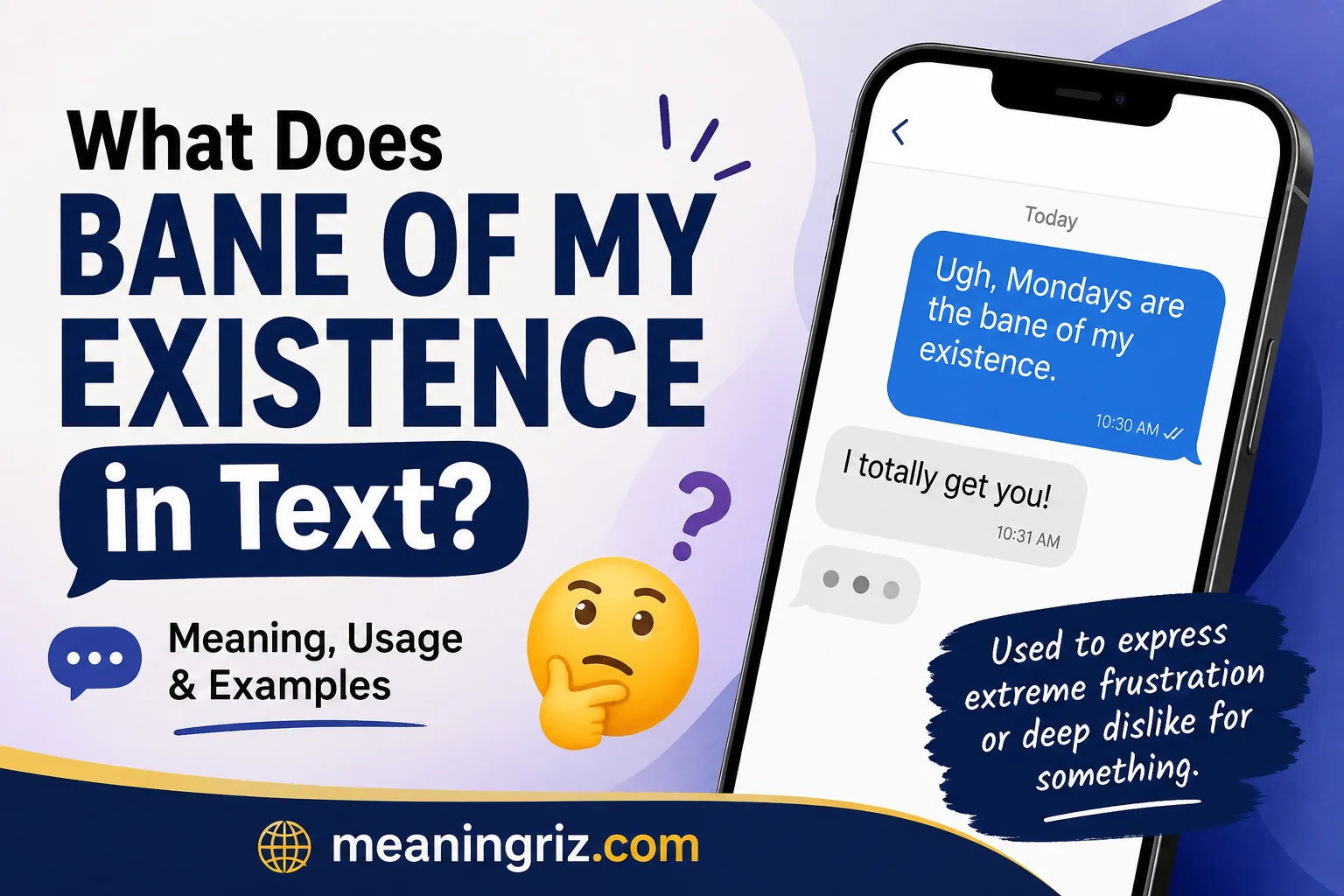
“Monday mornings are the bane of my existence.”
Nobody thinks Mondays literally ruin someone’s life.
It’s simply dramatic humor.
What Does It Mean on Different Platforms?
Usually playful between close friends or family.
Example:
“You changed the group photo again? You’re the bane of my existence.”
Snapchat
Often paired with laughing emojis, selfies, or streak conversations.
The tone is almost always lighthearted.
Common in comments and captions.
Example:
“My little brother—the bane of my existence.”
Followers usually understand it’s affectionate teasing.
TikTok
TikTok creators often use the phrase in relatable videos about:
- siblings
- roommates
- pets
- coworkers
- relationships
- daily struggles
The humor comes from exaggerating ordinary annoyances.
X (formerly Twitter)
You’ll often see posts like:
“Autocorrect is the bane of my existence.”
or
“Group projects remain the bane of my existence.”
The phrase works well for short, relatable complaints.
Is “Bane of My Existence” Rude?
Sometimes—but not usually.
Whether it sounds rude depends on:
- your relationship
- the conversation
- facial expressions (in person)
- emojis
- punctuation
- previous messages
Usually Not Rude
✔ Between close friends
✔ Between siblings
✔ Between romantic partners
✔ In memes
✔ During playful teasing
Can Sound Rude
❌ During an argument
❌ Between strangers
❌ In professional conversations
❌ If someone already feels hurt
Without context, the phrase can sound much harsher than intended.
Real Text Message Examples
Example 1 – Friends
Emma:
I hid your charger again.
Lily:
You’re literally the bane of my existence. 😂
Meaning: Friendly teasing.
Example 2 – Relationship
Alex:
I stole your hoodie.
Taylor:
You’re the bane of my existence… but I’m keeping you anyway.
Meaning: Affection mixed with playful annoyance.
Example 3 – Work Chat
Mondays are the bane of my existence.
Meaning:
The speaker dislikes Mondays—not their job necessarily.
Example 4 – Serious
You’ve honestly become the bane of my existence lately.
Meaning:
Real frustration.
This isn’t meant as a joke.
When People Actually Use This Phrase
In real conversations, people rarely use it for major life problems.
Instead, they use it for small annoyances that everyone can relate to.
Common examples include:
- siblings
- best friends
- partners
- pets
- slow Wi-Fi
- alarms
- homework
- traffic
- Monday mornings
- autocorrect
That’s what makes the phrase funny—it dramatically exaggerates something relatively minor.
When Should You Use It?
It’s a good choice when you’re:
- joking with close friends
- teasing someone you know well
- making memes
- posting relatable content
- exaggerating everyday frustrations
Because it’s dramatic by nature, it works best when everyone understands you’re joking.
When Should You Avoid Using It?
Avoid using the phrase if:
- you’re speaking to someone you don’t know well
- the conversation is already tense
- you’re writing a professional message
- the other person may misunderstand sarcasm
- you’re trying to comfort someone
Simple language is often better during serious conversations.
Why People Use This (Psychology)
People naturally exaggerate emotions to make conversations more entertaining.
Saying:
“You annoyed me.”
sounds ordinary.
Saying:
“You’re the bane of my existence.”
creates humor because it’s intentionally overdramatic.
In many friendships, this kind of exaggeration actually signals closeness.
People generally don’t joke this way with strangers.
Instead, they save dramatic phrases for relationships where everyone understands the humor.
Real communication observation: The stronger the friendship, the more exaggerated the teasing often becomes. That’s why phrases that sound negative on paper can actually express comfort and familiarity.
Common Mistakes People Make
Mistake #1: Taking It Literally
Many people think the phrase always means hatred.
In modern texting, that’s often not true.
Mistake #2: Ignoring Emojis
Compare:
You’re the bane of my existence.
vs.
You’re the bane of my existence 😂❤️
Those emojis completely change the emotional tone.
Mistake #3: Using It Too Early
Calling a new acquaintance “the bane of my existence” may sound insulting.
Among close friends, it’s usually understood as playful.
A Deeper Emotional Insight
One reason this phrase has become popular online is that it lets people express frustration without damaging the relationship.
Instead of saying:
“You really upset me.”
Someone might jokingly say:
“You’re the bane of my existence.”
If both people understand the humor, it releases tension while keeping the conversation light.
That’s why the phrase appears so often in close friendships and romantic relationships.
“Bane of My Existence” vs Similar Expressions
| Phrase | Meaning | Tone | Emotion | Risk Level | Best Used For |
|---|---|---|---|---|---|
| Bane of my existence | Constant annoyance | Playful or serious | Frustration | Medium | Friends, memes, relationships |
| Pain in the neck | Mild annoyance | Casual | Light frustration | Low | Everyday conversation |
| You’re impossible | Difficult person | Teasing | Amusement | Low | Friends and family |
| Driving me crazy | Extremely annoying | Casual | Frustrated | Low | Daily chats |
| You’re annoying | Direct criticism | Blunt | Negative | Medium | Honest conversations |
How to Respond
Friendly Responses
- “Glad I could keep life interesting.”
- “That’s what friends are for.”
- “I’ll take that as a compliment.”
Playful Responses
- “Mission accomplished. 😎”
- “Someone has to keep you humble.”
- “You’re welcome.”
Flirty Responses
- “Yet you still keep texting me.”
- “Admit it—you’d miss me.”
- “I’m your favorite problem.”
Neutral Responses
- “Fair enough.”
- “I’ll try to behave.”
- “Noted.”
Smart & Confident Responses
- “I’ll assume that’s affectionate exaggeration.”
- “I choose to hear the hidden compliment.”
- “Life would be boring without a little chaos.”
Cultural and Communication Differences
In some cultures, dramatic expressions are a normal part of friendly conversation. In others, people communicate more directly and may take phrases like “bane of my existence” literally.
Among English-speaking internet users in 2025–2026, the phrase is commonly recognized as playful exaggeration—especially when paired with emojis, memes, or obvious humor.
When chatting with someone from a different background, it’s worth remembering that not everyone interprets sarcasm the same way.
Frequently Asked Questions
What does “bane of my existence” mean in texting?
It usually means someone or something is very annoying, but in texting it’s often said jokingly or affectionately rather than literally.
Is “bane of my existence” a compliment?
Not directly. However, between close friends or partners, it can be a playful expression that still implies affection.
Is it rude to call someone the bane of your existence?
It can be if the relationship isn’t close or the conversation is already tense. With trusted friends, it’s often harmless teasing.
Can it be flirty?
Yes. Many couples use it jokingly to express playful frustration while showing they still care about each other.
Why do people say “bane of my existence”?
Because it’s a dramatic, funny way to describe everyday annoyances. The exaggeration makes conversations feel more entertaining and relatable.
What should I reply if someone says it to me?
Look at the context. If it’s playful, respond with humor. If it seems serious, acknowledge their feelings and ask what’s wrong instead of joking back.
Final Thoughts
The phrase “bane of my existence” may sound dramatic, but in modern texting it’s often much lighter than it appears. Most people use it to exaggerate everyday frustrations, tease someone they care about, or add humor to a conversation.
The key is understanding the context, relationship, and tone. A laughing emoji, an ongoing joke, or a close friendship can turn what looks like a harsh statement into a playful sign of familiarity. On the other hand, the same words can feel genuinely hurtful during a serious disagreement.
When you’re unsure, don’t focus only on the phrase itself—pay attention to the conversation around it. That’s usually where the real meaning becomes clear.
DISCOVER MORE ARTICLES
GMFU Meaning in Text Explained (Usage, Tone & Real Examples)
What Does Happy Ending Mean in Text? Full Breakdown 2026
Grand Rising Meaning in Text Explained (Usage, Tone & Real Examples)
Bilateral Meaning in Text Explained (Usage, Tone & Real Examples)

I’m the person behind this website, handling both the writing and content management myself. I focus on explaining word meanings, slang, and modern expressions in simple, clear language, using real-life examples so readers can understand how these terms are actually used in everyday conversations.