Someone just texted you “wyb” and now you’re staring at three lowercase letters wondering if it’s a typo, a nickname, or something you were supposed to already know.
It’s not a typo. And once you know what it means, you’ll start noticing it everywhere.
What Does WYB Mean?
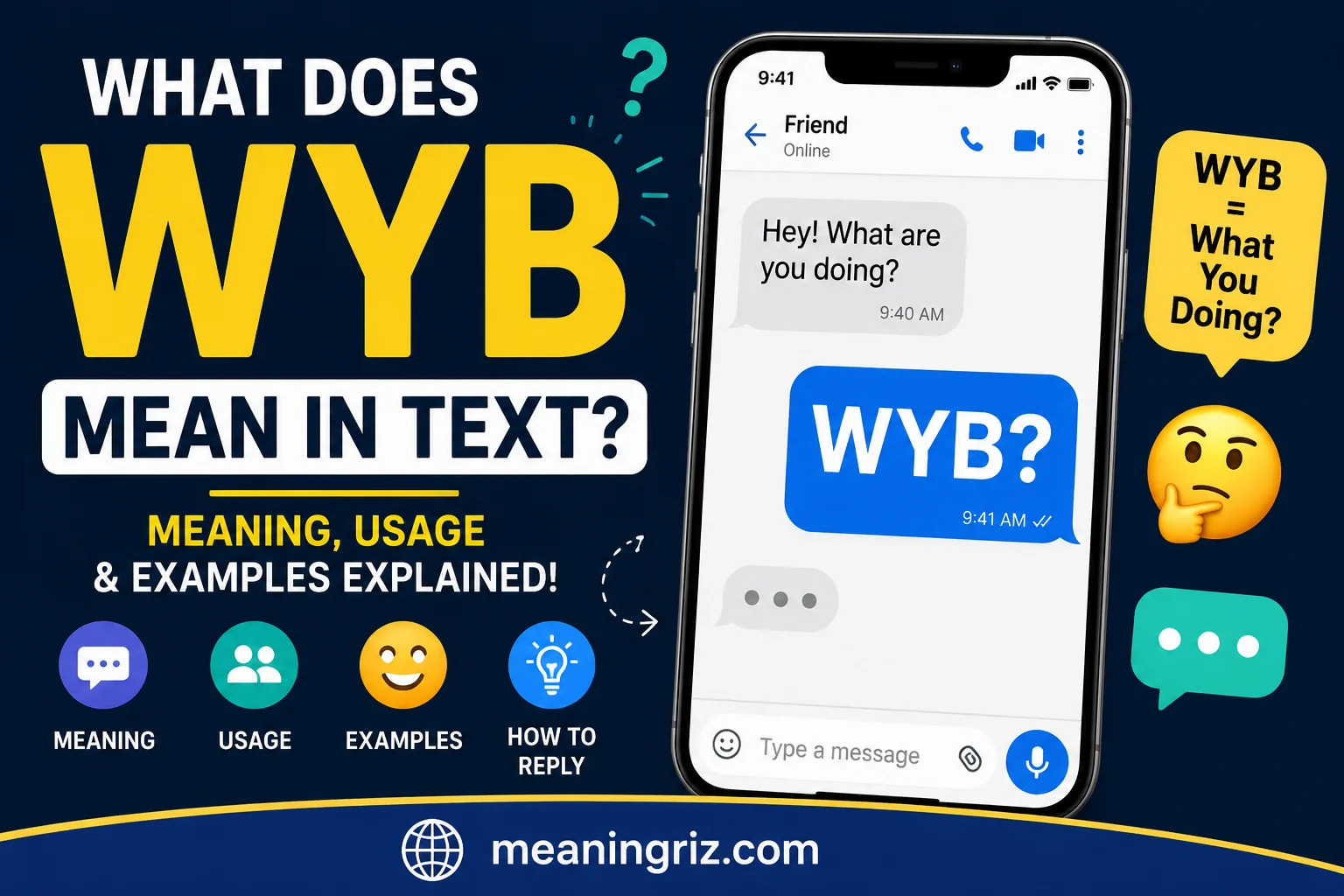
WYB stands for “What You Been” — a shortened, casual version of “What have you been up to?”
It’s a quick check-in. Someone asking WYB wants to know what’s been going on in your life recently — not right this second, but over the past few hours, days, or since you last spoke. It sits somewhere between “how are you?” and “catch me up.”
Here’s the featured-snippet version:
WYB = “What You Been (up to)?” — a casual texting abbreviation used to check in on someone’s recent activities or reconnect after a gap in conversation.
That’s the core. But WYB has a second meaning that shows up just as often, and that one changes things entirely.
WYB Has Two Common Meanings — Here’s the Difference
This is the part most explanations get wrong. They pick one meaning and ignore the other. In real texting, WYB is used in two distinct ways:
Meaning 1 — “What You Been (up to)?” The most common version. Someone’s asking what you’ve been doing recently. It’s conversational, warm, and usually signals that they’ve been thinking about you or want to reconnect.
“wyb? haven’t heard from you in a minute”
Meaning 2 — “Where You Been?” Less common but widely used — especially after someone goes quiet, disappears from a chat, or hasn’t responded in a while. This version carries a slightly different edge. It’s still friendly, but it has more of a “where did you go?” energy to it.
“wyb?? you fell off lol”
The words look identical. The difference is context — specifically, how long it’s been since your last conversation and what was happening before you went quiet.
A good rule of thumb: if the conversation had been flowing recently, it’s probably “What you been up to?” If there’s been silence for a while, it’s probably “Where you been?”
The Meaning Shifts by Situation
WYB doesn’t live in just one emotional space. The same three letters can carry completely different intent depending on when and how it lands.
As a warm reconnection: Someone texts “wyb” after not talking for a week. No drama, no pressure — they just genuinely want to catch up. This is the most common and most wholesome version.
As a playful nudge: “wyb been so quiet 😒” — this is low-level teasing. The person noticed your absence and is calling it out in a light, non-confrontational way. The emoji does the work of keeping it friendly.
As a conversation opener: On dating apps or early in a new texting relationship, “wyb?” is a low-stakes way to start talking without committing to a full question. It’s warmer than “hey” but less intense than asking something personal right away.
As a mild accusation: “WYB???” — note the capital letters and multiple question marks. This version isn’t warm. It reads as impatient or even frustrated, especially if the person has been waiting on a reply. The punctuation carries the emotion more than the word does.
Same abbreviation. Four different emotional registers. Reading the tone correctly matters more than knowing the definition.
Real Chat Examples (How WYB Actually Shows Up)
Two Friends Reconnecting After a While
Jay: wyb stranger You: lmaooo been crazy busy, work stuff mostly Jay: say less, same. we gotta catch up fr
This is the most natural use — easy, no pressure, just restarting a conversation.
After Someone Goes Quiet in a Group Chat
“yo wyb you just disappeared on us 💀”
Playful, slightly dramatic (that’s what the skull emoji is for), and completely normal in close friend groups.
In a Dating Context, as an Opener
“wyb lately? 👀”
That emoji changes everything. It turns a casual check-in into something more flirty. The person isn’t really asking for a life update — they’re looking for an excuse to talk to you.
When Someone’s Annoyed You’ve Been Ignoring Them
“WYB I texted you like 3 days ago”
Capital letters, no emoji, factual complaint in the same message — this is not a warm reconnection. This is “you owe me an explanation.”
As an Instagram Story Comment
Someone posts a story after weeks of silence Comment: “wyb??? 😭”
Common, casual, and essentially means “I’ve missed you / where have you been hiding.”
WYB on Different Platforms — Does the Meaning Change?
The definition stays the same wherever you see it. What changes is the tone and the intention behind sending it.
WYB on Snapchat
Snapchat shows streak counts and activity status, so if your streak breaks or you’ve been inactive, “wyb” shows up quickly. Here it almost always means “Where you been?” — because Snapchat is built around daily contact, and absence is visible.
WYB on Instagram DMs
Usually warmer and more social here. Someone saw your story, realized they haven’t talked to you in a while, and slid into your DMs with “wyb?” It’s rarely confrontational on Instagram — more likely a genuine check-in.
WYB in WhatsApp or iMessage
Tends to be the most literal version — someone actually wants to know what’s been going on. WhatsApp is where people have their more real, ongoing conversations, so WYB here is usually part of a genuine catch-up.
WYB on TikTok (Comments/DMs)
More likely to be playful or even sarcastic — especially in comment sections. Someone might comment “wyb 💀” on a creator’s video after they’ve been inactive for a month. It’s less personal, more community banter.
WYB in Gaming Chats (Discord, etc.)
Common when someone hasn’t been online in a while. “wyb bro haven’t seen you in the server” is a low-key way of saying they noticed and they want you back.
When to Use WYB (And When to Skip It)
When It Works Well
- You’re texting a close friend or someone you’re comfortable with
- You want to reconnect without making it feel like a big deal
- You’re picking up a conversation that went quiet naturally
- You want a casual opener that’s warmer than just “hey”
When to Avoid It
- Texting someone you don’t know well yet — it can feel presumptuous
- Professional messages of any kind (email, Slack to a manager, anything work-related)
- When you actually need an urgent or specific answer — too casual for real seriousness
- First contact with someone new — “wyb” implies you already have a relationship history
The informal warmth of WYB is its strength, but that same quality makes it feel out of place anywhere that calls for even mild professionalism.
Is WYB Rude?
By itself, no. But context and delivery can absolutely make it land that way.
WYB without any warmth around it — no emoji, no extra words, just “wyb” after days of silence — can read as passive-aggressive. It implies “you disappeared and now I want an explanation,” even if that wasn’t the intent.
Add an emoji or a name: “wyb Kira? 😊” — instantly warmer. Same three letters, completely different feeling.
Capital letters make it sharper. “WYB” hits differently than “wyb.” Lower case signals casual; caps signal frustration or at least more intensity.
The word itself isn’t rude. The packaging around it does all the heavy lifting.
Why People Use WYB (Psychology Behind It)
WYB sticks around because it does something emotionally smart — it lets you reach out to someone without fully committing to the vulnerability of saying “I missed you” or “I’ve been thinking about you.”
Three letters accomplishes all of that at arm’s length. If the person responds warmly, the conversation opens up naturally. If they’re cold or don’t reply, you haven’t really put yourself out there. The message feels casual enough that you can write off a non-response without it hurting the same way a longer, more invested message would.
This is also why WYB is so common in early-stage romantic conversations. It signals interest while giving both people a plausible exit. “I was just asking what you’ve been up to” is a very easy thing to say — and everyone knows it’s a soft way of saying more than that.
There’s also a social function: WYB is a relationship maintenance signal. Sending it tells the other person you noticed they were absent, you thought about them, and you value keeping the line of communication open. That’s a surprisingly meaningful message to send in four characters.
A Common Mistake People Make With WYB
The most common misread is replying to “wyb” as if it’s asking what you’re doing right now, when it’s actually asking about your recent past.
“wyb” → replying with “watching Netflix” misses the point if the person wanted to know what your week has been like.
A better instinct: treat WYB like “what have you been up to lately?” and give a bit more than just your current activity. Something like “been busy with [x], finally have a free weekend though” opens the conversation back up and gives them something to respond to.
Flat, one-word answers technically answer the question but usually kill the conversation.
WYB vs. Similar Texting Slang
People regularly mix up WYB with terms that look and sound similar. Here’s how they actually differ:
| Term | Full Meaning | Time Focus | Typical Tone | Emotional Undertone | Risk of Misreading | Best Used When |
|---|---|---|---|---|---|---|
| WYB | What/Where You Been? | Recent past | Casual, warm | Curiosity, reconnection, mild concern | Medium — two possible meanings | Reconnecting after a gap |
| WYD | What You Doing? | Right now | Casual, direct | Check-in, interest, conversation starter | Low | Starting a chat in the moment |
| WYA | Where You At? | Right now | Direct, practical | Location check or flirty signal | Medium — tone-dependent | Coordinating plans or checking in |
| WBU / WBY | What About You? | Any | Friendly, reciprocal | Turning the question around | Low | Following up after sharing something |
| HBU | How Bout You? | Any | Warm, casual | Genuine interest in their side | Low | Natural follow-up in conversation |
| WSP | What’s Up? | Right now | Very casual | Loose opener, low commitment | Low | General greeting with nothing specific |
The clearest line to remember: WYB looks backward (recent past), WYD looks at right now, WYA looks at location. They all check in — just at different time points and with different angles.
How to Respond to WYB
Friendly Response
“omg been so busy but i’m good! finally feel like i’m catching up. you?”
Short / Neutral Response
“not much honestly, been laying low. what about you”
Playful Response
“wyb yourself?? 😭 you disappeared first lol”
Warm Reconnection Response
“been a lot tbh — we def need to catch up properly. you free this week?”
If You’ve Been Avoiding Them (Honest Version)
“ngl been in my own head lately, sorry for the ghost. how have you been?”
The thread across all good responses: give something real, and bounce the energy back. WYB is almost always an invitation to talk — matching that invitation is the whole point.
Frequently Asked Questions
What does WYB mean in a text from a guy or girl?
The meaning is the same regardless of who’s sending it — “What you been up to?” or “Where you been?” What changes is intent. From a romantic interest, it often signals they’ve been thinking about you. From a close friend, it’s usually just a casual reconnection. Context, emoji, and timing tell you which one it is.
Is WYB the same as WYD?
No. WYD (“What You Doing?”) asks about the present moment — what you’re doing right now. WYB asks about the recent past — what you’ve been up to over the last few days or since you last talked. They’re similar in tone but different in time frame.
Why does WYB sometimes feel like an accusation?
Because it can be one. “Where you been?” has a built-in implication that you’ve been absent. Whether that reads as playful or confrontational depends entirely on how it’s written — lowercase with an emoji is warm, all-caps with multiple question marks is not.
Can you use WYB to start a conversation with someone new?
Technically yes, but it works best between people who already have some history. Sending “wyb” to someone you’ve never texted before is a bit odd — it implies you’ve been missing them, which doesn’t make sense for a first message. A plain “hey” or “what’s up” is a better opener for new connections.
Does WYB mean something different on Snapchat?
Not technically, but on Snapchat the “Where you been?” interpretation shows up more often because streak breaks and activity gaps are visible. If someone notices your streak died or you’ve been offline, “wyb” is a natural response to that visible absence.
Is WYB appropriate for work chats?
No. Even in casual workplace environments, it’s better to write something out fully. “What have you been working on?” or “How’ve things been?” reads as more professional without being stiff. Save WYB for personal conversations.
The Bottom Line
WYB means “What you been up to?” — or sometimes “Where you been?” depending on the gap in the conversation. At its core it’s a three-letter way of saying I noticed you were gone, and I’m glad you’re back or I haven’t heard from you in a while, tell me what’s going on.
The meaning is simple. The skill is reading the tone around it — the emoji, the capitalization, how long it’s been since your last message — because that’s what tells you whether someone’s warmly checking in or quietly calling you out.
DISCOVER MORE ARTICLES
FWIW Meaning in Chat, Texting & Social Media
GMFU Meaning in Text Explained (Usage, Tone & Real Examples)
What Does SMT Mean in Text? Meaning in Chat Explained (Usage & Examples)
What Does Beo Mean in Text? All Meanings Explained (With Examples
What Does GTF Mean in Text? Real Meaning, Tone & Examples