You’re scrolling through a group chat or a comment section, and someone types “PMTFO” like it’s the most obvious thing in the world. Everyone else seems to get it instantly. You don’t.
It looks aggressive. Maybe even a little alarming if you’re not used to internet shorthand. So before you start guessing, here’s the direct answer.
What Does PMTFO Mean?
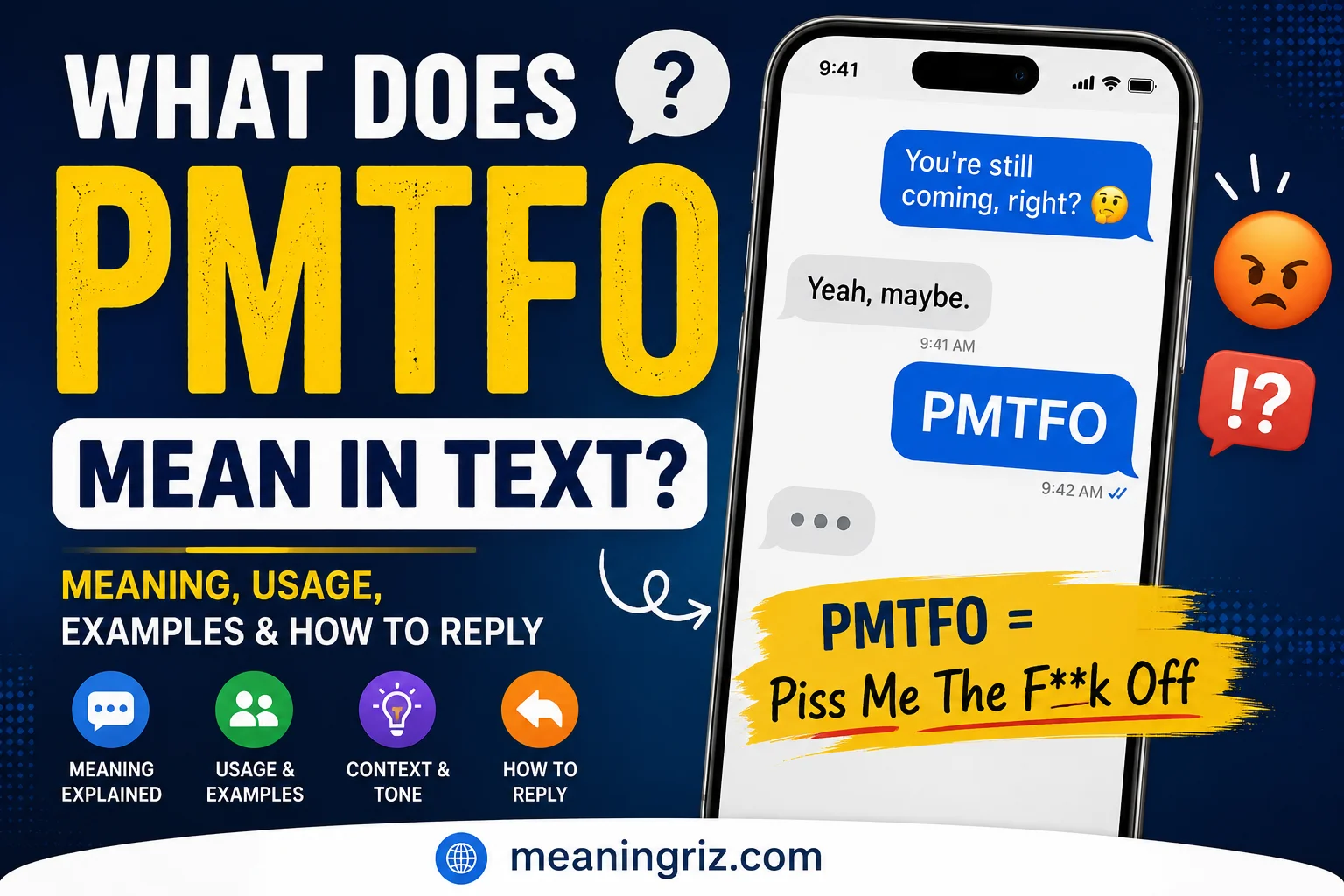
PMTFO stands for “Pissed Me The F* Off.”** It’s an intense, informal way of saying something made you really angry or deeply annoyed. People use it in texts, comments, and group chats to vent quickly without typing a full sentence.
That’s the core meaning. What changes — and what actually matters when you’re trying to read the message correctly — is how much anger is behind it, because PMTFO gets used for things ranging from genuine fury to mild, almost joking irritation.
The Simple Meaning, Without the Guesswork
PMTFO is an intensity word. It exists because “that’s so annoying” sometimes doesn’t feel strong enough, and people wanted a sharper, faster way to say “this really got to me.”
It carries built-in profanity, which is exactly why it reads as aggressive even before you know the full meaning. That’s not an accident — the swearing is doing the emotional heavy lifting, the same way raising your voice does in person.
PMTFO = “Pissed me the f* off”** — used to express strong frustration, anger, or annoyance about something that just happened.
That’s the clean, accurate version. No softening, no guessing.
But the Intensity Behind It Isn’t Always the Same
This is where most explanations flatten the term into one meaning and stop. In real conversations, PMTFO shows up at very different emotional temperatures.
1. Genuine anger. Something actually upset the person — a bad outcome, an unfair situation, being let down by someone they trusted. The frustration is real and current.
2. Exaggerated venting. A delayed delivery, a crashed game, a spoiled ending. Nothing serious happened, but the phrase makes the reaction feel bigger and more dramatic than it really is.
3. Dark humor or sarcasm. Sometimes it’s dropped into a story as a punchline, almost performing anger rather than feeling it. “Bro asked me for money and then unfollowed me. PMTFO 😭” is comedy, not rage.
4. Group-chat solidarity. Someone shares a frustrating moment, and a friend replies “PMTFO” purely to agree and validate, not because they’re personally angry at all.
Same five letters, four very different emotional registers. Reading PMTFO correctly means reading the story around it, not the word itself.
Real Chat Examples (How It Actually Shows Up)
Not textbook examples — the kind of exchanges this term actually lives in.
A Genuinely Frustrating Moment
A: my landlord just raised rent with two days notice B: that’s actually illegal where I live A: PMTFO honestly, I don’t even know what to do
This one carries real weight. The anger is current and specific.
An Exaggerated Reaction for Effect
A: ordered food an hour ago, still nothing B: PMTFO 😭 cancel and get a refund
Mild situation, dramatic phrasing. The humor is in the overreaction.
Used as a Punchline in a Story
“so he showed up late, forgot the tickets, AND tried to blame me. PMTFO.”
Here it’s wrapping up a story for comedic effect more than expressing live anger.
As Agreement, Not Personal Anger
A: my professor moved the exam up a week with zero warning B: that would PMTFO too, that’s so unfair
B isn’t angry. B is validating A’s anger.
Platform-by-Platform: Does PMTFO Change Meaning?
The definition stays fixed. What shifts across platforms is how performative versus personal the anger feels.
PMTFO on TikTok and Instagram Comments
Often the most exaggerated version. Comment sections reward dramatic reactions, so PMTFO here is frequently more about comedic emphasis than real anger.
PMTFO in Gaming Chats (Discord, in-game text)
Tends to be quick and situational — a bad respawn, a teammate’s mistake, a server crash. It’s reactive and momentary, rarely held onto after the match ends.
PMTFO in Group Chats Between Friends
This is where the real-anger version shows up most. Friends use it to vent about actual frustrations — relationships, work, family — because the group already has context for how serious to take it.
PMTFO on X (Twitter) or Public Posts
Frequently used for relatable, slightly comedic venting about universal annoyances (traffic, bad service, small daily frustrations) aimed at getting agreement from strangers, not personal catharsis.
The platform shapes the performance of the emotion. The word itself never changes.
When to Use PMTFO (And When Not To)
When It’s Fine to Use
- Texting close friends who already use casual, profanity-heavy slang with you
- Venting about something genuinely annoying in a private chat
- Adding dramatic emphasis to a story you’re telling for effect
When to Avoid It
- Any professional, academic, or formal communication
- Messaging someone you don’t know well, especially for the first time
- Talking to someone younger than you in a context where you’re expected to model language carefully
- Situations where the actual emotion is sadness or hurt rather than anger — PMTFO can flatten a more complicated feeling into something that just reads as aggression
A workable rule: if you wouldn’t say the full uncensored phrase out loud to this person’s face, don’t text them the abbreviation either. Shortening profanity doesn’t remove its weight, it just disguises it slightly.
Is PMTFO Rude?
It can be, and the built-in profanity is exactly why.
It reads as aggressive by default because anger words do that regardless of formatting. An abbreviation doesn’t soften swearing the way people sometimes assume it does — the emotional charge survives the shortening.
It feels harsh when sent directly at someone rather than about a situation. “You PMTFO” lands very differently than “that whole situation PMTFO,” because one is an attack and the other is a vent.
It’s rarely taken as rude between people who already swear casually with each other, because the baseline tone of that relationship already absorbs strong language without it feeling personal.
Why People Use This (Psychology)
There’s a reason intensity slang like PMTFO keeps spreading instead of fading out, and it’s not just about typing speed.
Strong language creates instant emotional validation. When someone vents with mild words, replies often feel obligated to ask follow-up questions. A strong reaction like PMTFO short-circuits that — it signals “this deserves a reaction” immediately, without needing to justify why.
Exaggeration is a social bonding tool, not just venting. Most people instinctively understand that “PMTFO” about a slow delivery isn’t real fury — it’s an invitation to commiserate together. The exaggeration itself becomes the joke that builds connection.
Profanity-coded slang signals trust. Choosing to use a swear-based abbreviation with someone is a small, often unconscious test of how comfortable the relationship is. People rarely open with PMTFO to someone new — it tends to appear once a friendship has already settled into a casual rhythm.
One real observation worth noticing: how someone uses PMTFO often tells you more about their current stress level than the actual event they’re describing. The same minor inconvenience gets a casual “lol annoying” on a calm day and a sharp “PMTFO” on a day when everything else already went wrong. The phrase is frequently a stress thermometer, not a literal reaction to the thing it’s attached to.
A Common Mistake People Make
The most common misread is assuming every PMTFO is genuine anger directed at the reader or the immediate situation, when it’s frequently aimed at something unrelated that’s just spilling into the conversation. Reacting to the intensity of the words instead of the actual context often escalates a moment that was never meant to be serious. Read the situation first, then decide how seriously to take the phrase.
PMTFO vs. Similar Frustration Slang
People often blur PMTFO together with other anger or annoyance abbreviations that actually sit at different intensity levels.
| Term | Meaning | Typical Tone | Emotional Intensity | Risk of Misreading | Best Used In |
|---|---|---|---|---|---|
| PMTFO | Pissed me the f*** off | Strong, blunt, sometimes exaggerated | High — but varies widely by context | High — easy to mistake venting for real anger | Close friends, casual venting, group chats |
| PMO | Pisses me off | Strong, direct | High, but slightly less harsh | Medium | Casual texting, social captions |
| SMH | Shaking my head | Disappointed, exasperated | Low to medium | Low | Light frustration, disapproval |
| IDC | I don’t care | Dismissive, detached | Low (or passive-aggressive if forced) | Medium — tone is easy to misjudge | Ending a topic, signaling indifference |
| FML | F*** my life | Defeated, dramatic | Medium — leans sad more than angry | Medium | Venting about bad luck, self-deprecating humor |
The key difference worth remembering: PMTFO and PMO express active anger at something. FML expresses defeat or bad luck. SMH expresses disapproval without much heat at all. They get mixed up because they all show up in similar venting moments, but the emotional core underneath each one is different.
How to Respond to “PMTFO” (By Tone)
Friendly Reply
“Ugh that’s so unfair, are you okay?”
Neutral / Practical Reply
“That sucks. What happened exactly?”
Playful Reply
“PMTFO certified moment 😭 tell me everything”
Smart / Confident Reply
“Valid. What’s the move now?”
The common thread across good replies: they take the feeling seriously without assuming the worst, and they invite the person to keep talking. A reply that’s purely dismissive (“ok”) can feel like the venting wasn’t worth sending at all, even if that’s not what you meant.
Frequently Asked Questions
What Does PMTFO Mean in a Text?
PMTFO means “pissed me the f*** off.” It’s used to express strong frustration or anger about something, ranging from genuinely serious situations to exaggerated, half-joking complaints.
Is PMTFO the Same as PMO?
They’re closely related, but PMTFO is the more intense, fully spelled-out version, while PMO (“pisses me off”) tends to read as slightly milder and more casual in everyday use.
Is PMTFO Rude or Offensive?
It contains implied profanity, so yes, it can come across as rude depending on who you’re talking to and how it’s used. Among close friends who already swear casually, it usually isn’t taken personally.
Can PMTFO Be Used Jokingly?
Yes, very often. A large portion of its real-world use is exaggerated or comedic rather than literal anger, especially in comment sections and group chats among friends.
Does PMTFO Mean Something Different on Snapchat or TikTok?
The meaning itself doesn’t change. What shifts is the likely intent — on public platforms like TikTok comments, it tends to lean more performative and exaggerated than it does in private texts with close friends.
What’s a Less Aggressive Way to Say the Same Thing?
“That really annoyed me,” “that’s so frustrating,” or “that got under my skin” carry a similar meaning without the built-in profanity, making them safer for mixed company or formal contexts.
The Bottom Line
PMTFO means “pissed me the f*** off” — that part is straightforward. The skill that actually matters is judging how much anger is really behind it, since the same phrase covers everything from genuine fury to a joke about a slow food delivery. Once you start reading the situation around the message instead of just the word itself, PMTFO stops feeling intense and confusing and starts feeling easy to size up correctly.
DISCOVER MORE ARTICLES
FWIW Meaning in Chat, Texting & Social Media
GMFU Meaning in Text Explained (Usage, Tone & Real Examples)
TB Meaning in Text Explained (Usage, Tone & Examples)
What Does OFCC Mean in Text? (Meaning, Tone & Real Examples)
HR Meaning in Text Explained (Hour vs Human Resources, With Examples)
What Does ORD Mean in Text? (Real Meaning, Not Guesswork)