You’re scrolling through a chat and someone replies with just “ong.”
No other context. Not “OMG,” not a typo — just three letters sitting there, and now you’re wondering if you misread something or missed an entirely new slang word.
You didn’t. Here’s what it actually means, and why people use it so much more than you’d expect.
What Does ONG Mean?
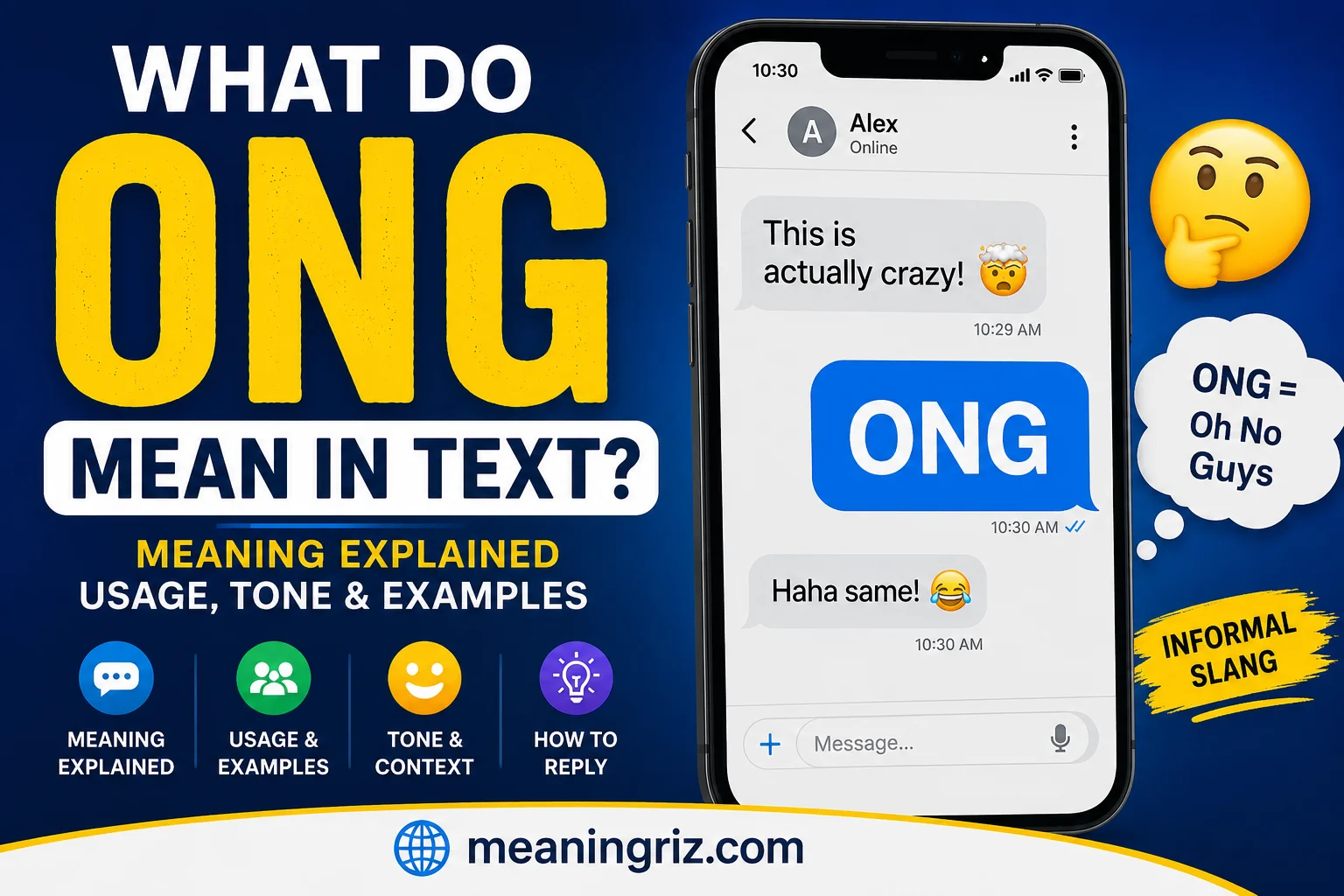
ONG stands for “On God.” It’s a slang phrase people use to swear they’re telling the truth or to add strong emphasis to what they just said — similar to saying “I swear” or “for real.”
ONG = “On God” — used to stress honesty, seriousness, or strong agreement in casual texting and social media.
That’s the core meaning. The interesting part is how much weight those three letters can carry depending on tone, punctuation, and who’s saying it — which is what actually trips people up.
The Simple Meaning, Without the Overthinking
At its root, ONG is a way of backing up a statement. It’s the texting version of putting your hand up and saying “I mean it.”
It comes from the older spoken phrase “on God,” used for generations in casual speech as a way of swearing something is true. Texting culture shortened it the way it shortens everything — fewer letters, same punch.
So when someone types “ong,” they’re basically saying: trust me, this is real.
ONG vs. OMG — Don’t Mix These Up
This is the single biggest confusion point, and it’s worth clearing up early.
They look almost identical and are one letter apart, but they mean completely different things:
- OMG = “Oh My God” — expresses surprise or shock
- ONG = “On God” — expresses honesty or serious agreement
If a friend texts “ong that test was impossible,” they’re not surprised — they’re confirming it was genuinely that hard. Read it as “I’m serious,” not “I can’t believe it.”
But the Meaning Shifts Depending on Tone
ONG doesn’t always carry the same emotional weight. The same three letters can land very differently depending on what’s happening around them.
1. Plain agreement. Someone says something true and you confirm it. Low-stakes, almost automatic.
2. Strong emphasis. Used to push a statement further, almost like adding an exclamation point with extra sincerity.
3. Surprise mixed with belief. Sometimes ONG shows up as a reaction to news that’s shocking but accepted as true — “ong?? that’s crazy.”
4. Sarcasm. When tone in the conversation is already joking, “ong” can flip into something dry or sarcastic instead of sincere.
The word itself never changes. What changes is everything happening around it — the relationship, the conversation’s mood, and what came right before it.
Real Chat Examples (How It Actually Looks)
Here’s what ONG looks like in actual conversations, not textbook ones.
Confirming Something Is True
A: “That exam was way too hard.” B: “ong, I barely finished in time.”
Reacting to Surprising News
A: “He actually won the match.” B: “ong?? that’s crazy”
Here it shows disbelief mixed with acceptance — surprised, but not doubting it.
Adding Emphasis to a Compliment
A: “Your photos from the trip are gorgeous.” B: “ong, that sunset was unreal in person”
Used Sarcastically
A: “You’re definitely the smartest person in this group.” B: “yeah ong 🙄”
The tone here flips the meaning entirely — it’s the opposite of sincere agreement.
Defensive or Reassuring
A: “Did you really finish the whole project alone?” B: “ong I did, no help at all”
Platform-by-Platform: Does ONG Change Meaning?
The core meaning stays the same everywhere. What shifts is how casual or expressive it feels depending on where it shows up.
ONG on TikTok
Extremely common in comments, usually to strongly agree with a video or back up a reaction with extra sincerity.
ONG on Snapchat
Tends to feel more personal here, often used in one-on-one chats to confirm something private or emotional.
ONG on Instagram
Shows up a lot in captions and comments, often paired with emojis to add dramatic or emotional weight to a post.
ONG on WhatsApp
More direct and personal, usually between people who already know each other well — closer to its plain “I swear” meaning.
ONG in Regular Texting (SMS/iMessage)
Used the same way as in casual speech — short, sincere, and usually placed at the end of a sentence for emphasis.
When to Use ONG (And When Not To)
When It’s Fine to Use
- Texting friends or people you talk to casually
- Reacting to something surprising, funny, or emotional
- Backing up a statement you want someone to take seriously
When to Avoid It
- Professional emails, reports, or messages to a boss
- First conversations with someone you don’t know well
- Formal writing of any kind, even if the tone is casual elsewhere
A simple test: if you wouldn’t say “I swear” out loud in that setting, don’t type “ong” there either. The slang carries the same emotional register as the phrase it came from.
Is ONG Rude?
Not by default, but tone can push it that way.
It can feel sarcastic or dismissive if it’s used right after a compliment that wasn’t really meant — “yeah ong” after a backhanded statement reads as mocking, not sincere.
It can feel intense if overused, since stacking it onto every sentence dilutes its meaning and starts to feel performative rather than genuine.
It’s rarely rude in normal use between friends. Context and existing tone in the conversation almost always decide whether it reads as sincere, playful, or sharp.
Why People Use This (Psychology)
There’s a reason ONG caught on so widely beyond just being short and easy to type.
It compresses emotional proof into one word. Saying “I’m serious, I’m not exaggerating, please believe me” takes effort. “Ong” does the same job in three letters, which matters a lot in fast-moving chats where nobody wants to slow down to make a point.
It signals identity, not just meaning. Using current slang like this is partly about sounding current and culturally plugged-in, not just about communicating the literal phrase. People often choose it over more neutral words like “really” or “seriously” specifically because of how it sounds.
It reduces the social cost of being wrong. Here’s the part most explanations skip: when someone adds “ong” to a claim, they’re often pre-empting disbelief. It’s used most when a statement sounds exaggerated or hard to believe, almost like building in a defense before anyone can push back.
One real observation worth noting: the placement of “ong” changes its emotional intensity. At the end of a sentence, it reads as confirming. Standing completely alone as a one-word reply, it reads as far more serious or emotionally loaded — almost like a verbal double-take.
A Common Mistake People Make
The biggest misread is treating ONG as always sincere. In reality, sarcastic or joking use is extremely common, especially in already-playful conversations. Reading “ong” the same way every time — as pure honesty — means missing the cases where it’s actually doing the opposite, softened sarcasm dressed up as agreement.
ONG vs. Similar Texting Slang
People often lump ONG together with other emphasis slang, but the tone and intensity actually differ.
| Term | Meaning | Typical Tone | Emotional Undertone | Risk of Misreading | Best Used In |
|---|---|---|---|---|---|
| ONG | On God | Sincere, emphatic | Honesty, seriousness, sometimes sarcasm | Medium — sarcasm can flip the meaning | Confirming truth, reacting to news |
| No cap | No lie | Confident, direct | Honesty, confidence | Low | Backing up a bold claim |
| Fr / Frfr | For real | Casual, quick | Agreement, light emphasis | Low | Quick confirmations |
| Deadass | Seriously | Blunt, sincere | Seriousness, sometimes frustration | Medium | Strong emphasis, can sound intense |
| OMG | Oh My God | Reactive, expressive | Surprise, shock | Low | Reacting to unexpected news |
The key difference worth remembering: ONG swears something is true. OMG reacts to something being surprising. They look similar at a glance but serve opposite emotional purposes.
How to Respond to “ONG” (By Tone)
Friendly Reply
“Right?? I knew it”
Neutral / Practical Reply
“Okay good to know”
Playful Reply
“Ong or are you exaggerating again 👀”
Smart / Confident Reply
“I believe you, no need to swear on it lol”
The pattern across all of these: matching the energy of the original message usually works better than responding flatly. ONG is emotionally loaded, so a one-word reply back can feel like the conversation just stalled.
Frequently Asked Questions
What Does ONG Mean in a Text From a Girl or Guy?
The meaning doesn’t change based on who sends it — it’s still “on God.” What shifts is context: in a flirty conversation, it can add sincerity to a compliment. Between friends, it’s usually just confirming something is true.
Is ONG the Same as OMG?
No. ONG means “on God” and expresses honesty or serious agreement. OMG means “oh my God” and expresses surprise or shock. They’re one letter apart but emotionally opposite in many cases.
Is ONG Religious?
Not in most modern usage. While the full phrase technically references God, almost nobody using “ong” in a text is making a religious statement — it’s used casually as emphasis, the same way “I swear” is used without literal intent.
Can ONG Be Sarcastic?
Yes, frequently. If the conversation is already joking or someone’s being dismissive, “ong” can flip from sincere agreement into dry sarcasm. Tone and what came right before it are the biggest clues.
Is It Okay to Use ONG With Older People or Parents?
It depends on familiarity. Many parents and older relatives now recognize common slang, but it can still come across as confusing or overly casual if the relationship isn’t already informal.
Why Do People Use Slang Like ONG Instead of Just Saying “I Swear”?
Speed and identity, mostly. It’s faster to type, and using current slang is partly about sounding culturally current, not just about saying the same thing in fewer letters.
The Bottom Line
ONG means “on God” — a quick way of swearing something is true or adding serious emphasis to a statement. The real skill isn’t memorizing the definition, it’s reading the tone around it: sincere agreement, surprised disbelief, or quiet sarcasm. Once you start noticing where it lands in a sentence and what mood the conversation already has, “ong” stops being confusing and starts being easy to read instantly.
DISCOVER MORE ARTICLES
FWIW Meaning in Chat, Texting & Social Media
GMFU Meaning in Text Explained (Usage, Tone & Real Examples)
TB Meaning in Text Explained (Usage, Tone & Examples)
FWY Meaning in Text Explained (Usage, Tone & Real Examples)