You’re mid-conversation, things are flowing, and then this lands:
“gtg”
No goodbye, no explanation, just three letters — and now you’re left wondering if they got busy, got bored, or just didn’t want to keep talking.
Here’s the short answer, then we’ll get into the part that actually matters.
What Does GTG Mean?
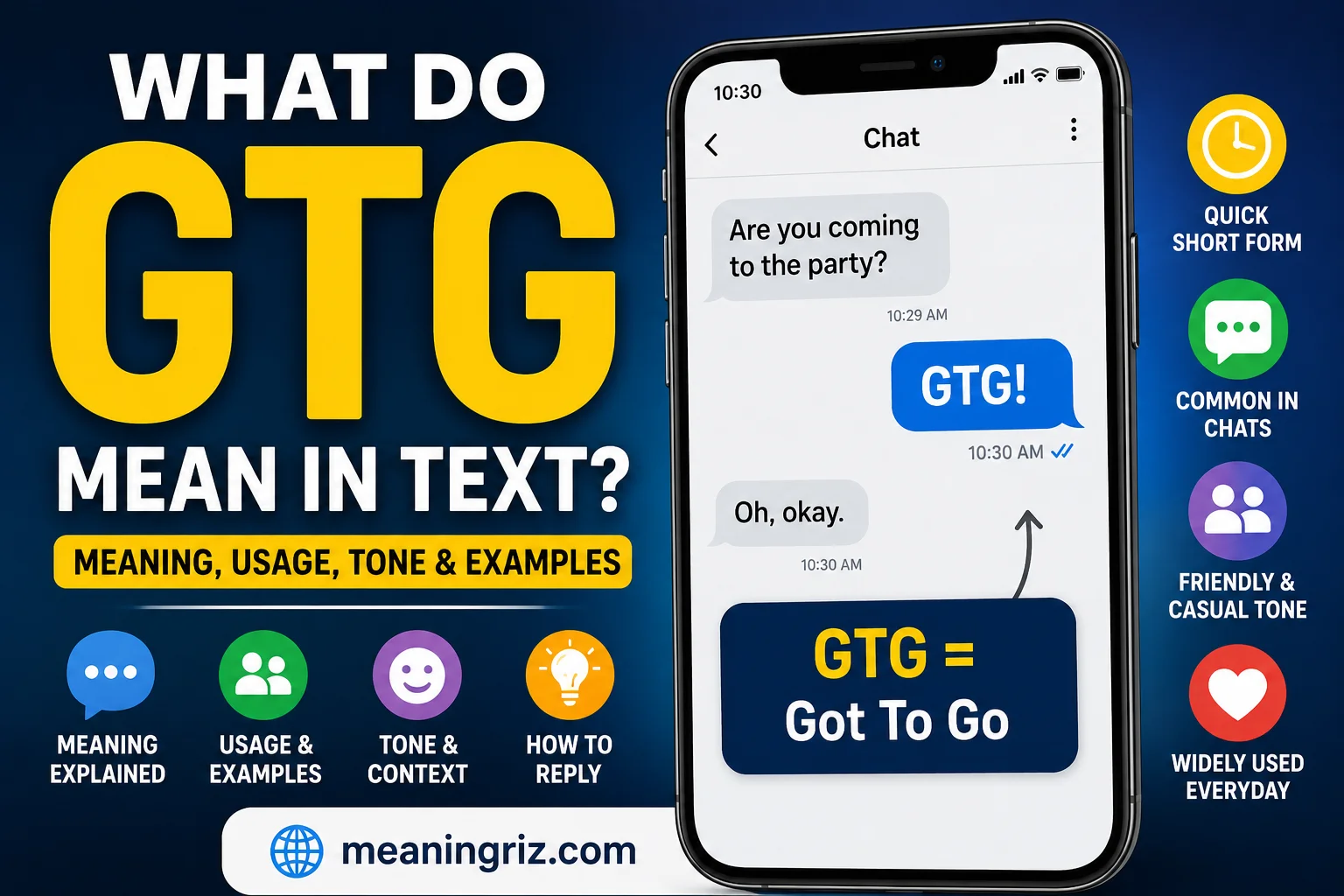
GTG stands for “Got To Go.” It’s a quick way of telling someone you have to leave a conversation, whether that’s a text thread, a group chat, a game, or a call. It’s casual, common, and almost always used as a polite exit, not a dramatic one.
GTG = “Got To Go” — a short, casual way of saying you need to end or step away from a conversation.
That’s the literal answer. But like most one-word goodbyes, how it lands depends on timing, tone, and what was happening in the conversation right before it showed up.
The Simple Meaning, Without the Overthinking
GTG is one of the oldest pieces of texting shorthand still in regular use. It comes from early instant-messaging days — AIM, MSN Messenger, group chats on slow internet connections — when typing fast mattered more than typing politely.
“I’ve got to go now” became “gtg” because nobody wants to type a full sentence just to say goodbye.
In plain English, it simply means: the person is ending the conversation, usually for a real reason — not because of you.
That last part is worth repeating, because it’s the thing people misread the most.
But the Meaning Can Shift Depending on Timing
GTG itself doesn’t carry much emotion. It’s one of the most neutral exits in texting slang. But when it shows up changes how it feels.
1. Right after good news or a fun exchange. “Lol that’s hilarious, gtg though” — this is just life interrupting a good conversation. Nothing personal.
2. Mid-disagreement or a serious topic. “gtg” with no explanation, sent right after you said something important, can feel like an exit, not just a goodbye. This is the one situation where GTG actually does carry weight.
3. At the end of a long chat. Often used as a soft wind-down — both people already sense the conversation is naturally ending, and “gtg” just makes it official.
4. In the middle of flirting or a late-night chat. “gtg… night 😅” usually isn’t a brush-off. It’s often just real life (sleep, family, low battery) cutting in.
Same three letters, very different emotional weight depending on what came right before them.
Real Chat Examples (How It Actually Looks)
Not textbook examples — the way it actually shows up in real conversations.
Mid-Conversation, No Big Deal
You: lol you’re so dramatic Friend: I KNOW 😭 anyway gtg, mom’s calling You: lol bye
After Something Serious Was Just Said
You: I think we need to talk about this properly Them: gtg, ttyl
This is the version that actually stings a little — not because of the words, but because of the timing.
In a Gaming Chat
Teammate: one more round? You: nah gtg, dinner’s ready
Late at Night, Slightly Flirty
“this was fun, gtg now though 😅 night”
This usually means exactly what it says — they have to go, but they enjoyed the chat enough to say so.
In a Group Chat
“gtg guys, talk later!”
Low-stakes, no one expected a long goodbye anyway.
GTG on Different Platforms
The meaning stays identical everywhere. What changes is the social weight behind it.
GTG on WhatsApp
Usually practical — family chats, friend groups, work coordination. It’s almost always literal here: someone genuinely has to step away.
GTG on Snapchat
Common as a quick streak-saving sign-off. It rarely means anything beyond “talk later.”
GTG on Instagram or TikTok DMs
Similar to texting — a normal, low-drama way to end a back-and-forth. Occasionally used jokingly in comment sections, almost as a bit rather than a literal exit.
GTG in Gaming Chats (Discord, in-game voice/text)
Extremely common and almost entirely functional — it usually just means the person is logging off or stepping away from the match.
GTG in Regular Texting (SMS/iMessage)
The most neutral version of all. Between people who know each other well, it rarely needs any explanation at all.
When to Use GTG (And When Not To)
When It’s Fine to Use
- You’re ending a casual chat with a friend or someone you text often
- You genuinely need to leave and want to say so quickly
- The conversation has naturally reached a stopping point
When to Avoid It
- You’re in a serious or emotionally heavy conversation — a flat “gtg” can feel like you’re avoiding the topic, even if that’s not your intent
- You’re messaging a boss, client, or someone in a formal context
- Someone just shared something vulnerable or important and hasn’t gotten a real response yet
A simple test: if leaving the conversation right now would feel like walking out of a room mid-sentence, don’t just say “gtg” — say why.
Is GTG Rude?
Not by default. It’s actually one of the more polite, low-conflict ways to end a conversation in texting culture.
It can feel cold or dismissive in a few specific situations: when it’s sent with zero explanation right after someone says something that mattered, when it’s used repeatedly to avoid a topic instead of just once to leave, or when there’s clearly more to say and the conversation just gets cut off anyway.
Outside of those moments, GTG is about as harmless as texting slang gets. It’s built to be neutral, and most of the time, that’s exactly how it reads.
Why People Use This (Psychology)
There’s more going on with a three-letter goodbye than it looks like on the surface.
It avoids the awkwardness of a real goodbye. Ending a conversation properly — explaining why, softening it, checking the other person is okay with it — takes effort. “Gtg” skips all of that without feeling rude, because it’s already understood as shorthand, not a personal statement.
It protects against over-explaining. Most people don’t actually want to justify every exit from a conversation. GTG lets someone leave without producing a reason, which keeps the exit feeling casual instead of like a negotiation.
It’s a low-commitment way to end things on a good note. Saying “gtg” instead of just going silent is actually a small act of consideration — it tells the other person “this isn’t about you,” even when no further explanation is given.
One real observation from how people actually text: the words around “gtg” usually carry more meaning than the abbreviation itself. “Gtg, talk soon 😊” and a plain “gtg.” with a period are doing very different emotional jobs, even though the core message is identical.
A Common Mistake People Make
The biggest misread is assuming a flat “gtg” with no extra words means something is wrong. Most of the time, it’s just genuinely about real life pulling someone away — not a hidden signal. Reading too much into the absence of an explanation often creates tension that was never actually there. If something does feel off, the better move is to ask directly later, not assume based on three letters.
GTG vs. Similar Texting Slang
People often lump GTG together with other exit phrases, but they don’t all mean the same thing.
| Term | Meaning | Typical Tone | Emotional Undertone | Risk of Misreading | Best Used In |
|---|---|---|---|---|---|
| GTG | Got to go | Neutral, casual | Polite exit, no drama | Low — unless timing is bad | Ending a chat, leaving for a real reason |
| BRB | Be right back | Light, temporary | Reassuring, short pause | Very low | Stepping away briefly, not ending the chat |
| TTYL | Talk to you later | Friendly, warm | Continuation implied | Low | Ending a chat with intent to reconnect |
| AFK | Away from keyboard | Functional, neutral | Practical, no emotion | Very low | Gaming or group chats |
| GTFO | Get the f— out | Strong, blunt | Aggressive or joking | High — tone-dependent | Joking between close friends only |
The key difference worth remembering: GTG means you’re leaving and likely not coming right back. BRB means you’ll be back in a few minutes. Mixing the two up is one of the most common small misunderstandings in casual texting.
How to Respond to “GTG” (By Tone)
Friendly Reply
“No worries, talk later!”
Neutral / Practical Reply
“Okay, sounds good”
Playful Reply
“Rude, but okay 😂 bye”
Smart / Confident Reply
“Go handle your business, I’ll be here”
The pattern across all of these: a good reply matches the low-pressure tone GTG was sent with, rather than turning a quick exit into a bigger conversation than it needs to be.
Frequently Asked Questions
What Does GTG Mean in a Text From a Girl or Guy?
The meaning doesn’t change based on who sends it — it’s still “got to go.” Context around it (tone, timing, what was said before) tells you more than the gender of the sender ever will.
Is GTG the Same as BRB?
No. GTG usually means the person is ending the conversation for a while, possibly the rest of the day. BRB means a short pause — they’re coming right back.
Is It Rude to Just Say “GTG” Without Explaining?
Not usually. It only feels rude when it’s sent right after something serious was said, or used repeatedly to dodge a topic. In ordinary conversation, no explanation is needed.
Does GTG Always Mean “Got To Go”?
Almost always in texting. In a small number of non-chat contexts — like project updates or planning — “GTG” can mean “Good To Go,” but context usually makes this obvious immediately.
Can GTG Be Used in a Professional Setting?
It’s best avoided in work emails or formal messages. “I need to step away, let’s continue later” reads as more professional and avoids any confusion.
Why Do People Still Use GTG When There Are Newer Slang Terms?
Because it’s short, universally understood, and carries almost no emotional risk. Unlike trend-based slang, GTG doesn’t need explaining to anyone, which is exactly why it has outlasted most other texting shorthand.
The Bottom Line
GTG means “got to go” — a quick, low-drama way to leave a conversation. The real skill isn’t memorizing the definition, it’s reading the moment it shows up in. Most of the time, it means exactly what it says. Once in a while, the timing tells you there’s more going on — and now you’ll know the difference.
DISCOVER MORE ARTICLES
FWIW Meaning in Chat, Texting & Social Media
WYA Meaning in Text Explained (Usage, Tone & Real Examples)
GMFU Meaning in Text Explained (Usage, Tone & Real Examples)
TB Meaning in Text Explained (Usage, Tone & Examples)