You see it in a comment, a DM, or a Discord server:
“Love your new pfp” “Why did you change your pfp?” “pfp check 👀”
And you pause for a second — either because you’ve never seen it before, or because you’re not sure why someone’s bringing it up like it’s a big deal.
Here’s the quick answer, then the full story.
What Does PFP Mean in Text?
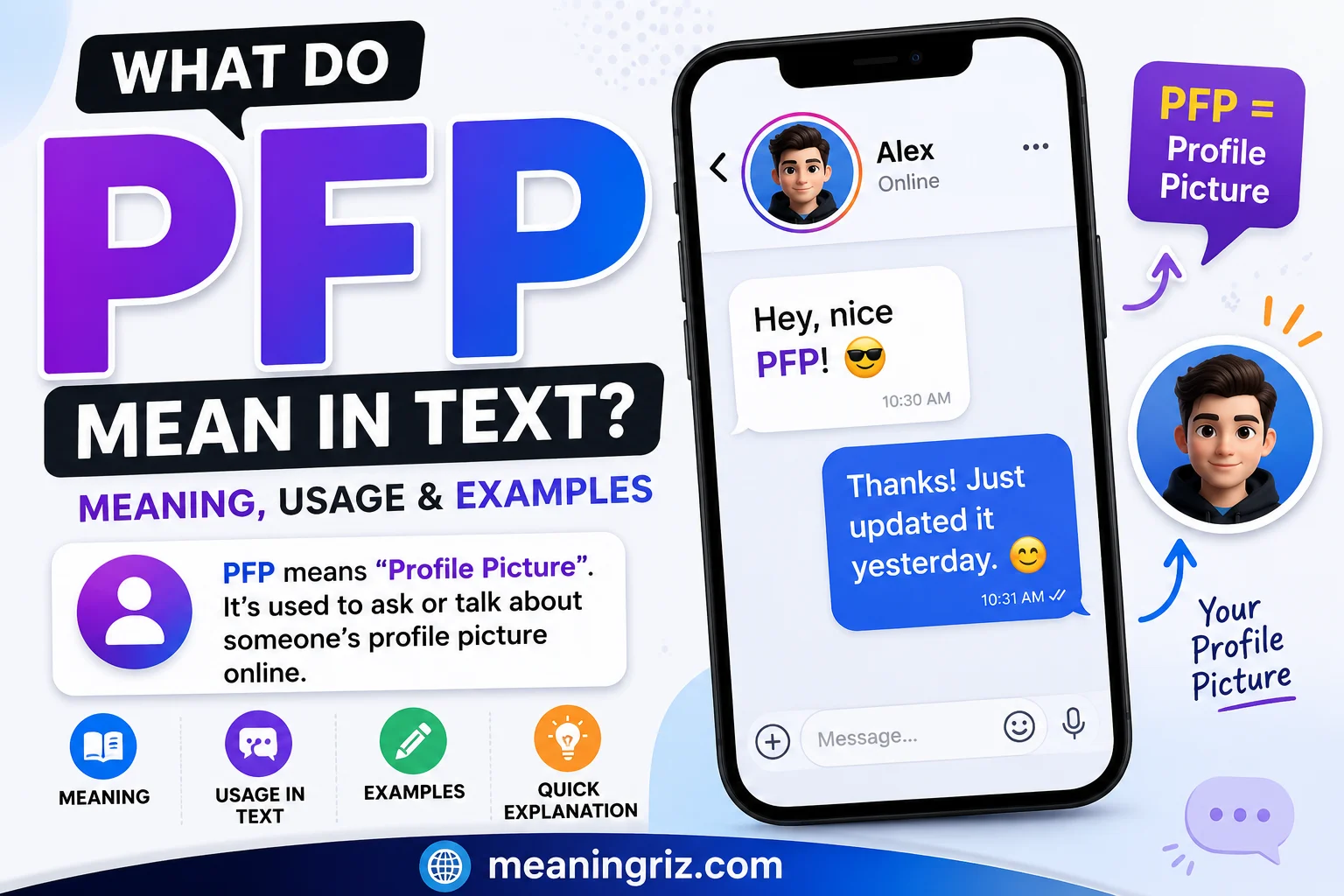
PFP stands for “Profile Picture.” It’s the image — a photo, illustration, avatar, or meme — that represents you on any social media or chat platform. When someone mentions your pfp in a message, they’re talking about that image.
Quick definition: PFP = Profile Picture. The small image that shows up next to your name on Instagram, Discord, TikTok, WhatsApp, Snapchat, or any platform where you have an account.
That’s the core meaning. But like most internet slang, there’s more to it once you look at how people actually use it in real conversations.
The Main Meaning — And the Secondary One Most People Don’t Know
Profile Picture (Primary Meaning)
This is what pfp means in about 95% of conversations. Someone is commenting on, asking about, or referring to the image on your profile. Simple as that.
“Love your pfp” = I like your profile picture. “When did you change your pfp?” = I noticed your profile picture is different. “Rate my pfp” = Tell me what you think of my profile image.
Picture for Proof (Secondary Meaning)
In certain contexts — usually online marketplaces, Twitter debates, or group chats where someone makes a claim — “pfp” can mean “Picture for Proof.” This is far less common, but it shows up enough to be worth knowing.
Someone says something unbelievable, and the reply is: “pfp?” — meaning, screenshot or photo that proves it.
The context almost always makes it obvious which one is being used. If someone’s talking about avatars and aesthetics, it’s Profile Picture. If someone just made a bold claim and people are skeptical, it might be Picture for Proof.
How PFP Actually Looks in Real Conversations
Complimenting Someone’s Picture
Alex: “new pfp goes hard 🔥” Sam: “finally changed it lol, been using that old one for a year”
This is the most common use — someone noticed a change and reacted to it.
Asking About an Update
“wait why is your pfp black? you okay?”
A black or blank profile picture often signals something emotional — someone processing something difficult, or participating in a social media solidarity movement. People genuinely ask about this because they’ve learned a pfp change can carry meaning beyond just aesthetics.
In a Group Chat or Server
“pfp check — we’re all matching this weekend 🎮”
Discord servers and friend groups sometimes coordinate matching or themed profile pictures. It’s a small way people signal that they belong to the same community.
Asking for Proof
Person A: “I literally scored 30 points in that game” Person B: “pfp or it didn’t happen 💀”
Here pfp means Picture for Proof — show a screenshot, it’s not believed otherwise. This usage is casual and often jokey.
On a Dating App
“your pfp is what made me swipe”
This one carries weight. On apps where the picture is often the only thing someone sees first, a pfp comment is genuinely personal — it’s saying your appearance or vibe caught their attention.
PFP Across Platforms — Does the Meaning Change?
The word stays the same everywhere. The emotional weight behind it shifts depending on where you are.
PFP on Discord
Discord culture treats pfp very seriously. Servers often have pfp themes, matching pfps between friends, and even pfp “lore” (inside jokes tied to specific images). A pfp comment in Discord is often more community-focused than personal.
PFP on Instagram
On Instagram, a pfp is called a profile picture but the function is deeply tied to aesthetic and branding. Comments like “pfp goals” or “this pfp era is everything” are about vibes, personality projection, and how well the image represents the account’s overall look.
PFP on TikTok
TikTok pfps trend. When a creator goes viral, people screenshot and use their image as their own pfp as a fan gesture. You’ll also see videos like “rating your pfps” or “best pfp aesthetic” with hundreds of thousands of views — the pfp is genuinely part of TikTok culture.
PFP on Snapchat
Snapchat calls it a Bitmoji or profile photo, but “pfp” still gets used informally when friends talk about it in chat. Less public, more personal — usually between people who already know each other.
PFP on WhatsApp
On WhatsApp, the profile picture is something people genuinely monitor. When someone removes their photo or goes to a plain color, people notice and sometimes reach out. “Your pfp disappeared — everything good?” is a real conversation that happens.
PFP in Gaming Chats
In gaming communities, your pfp is part of your persona. People have long-running avatars tied to their gaming identity — sometimes a character, a clan logo, or custom art. A pfp change in gaming can feel like a bigger shift than it would on a casual social app.
When to Use PFP and When Not To
Fine to Use When:
- Chatting with friends, mutuals, or anyone who’s online regularly
- Commenting on someone’s social media post casually
- Talking about your own profile image with someone your age or in a similar online space
Avoid It When:
- Messaging someone in a professional or formal context
- Texting older family members who may not be familiar with the term
- Writing anything official — use “profile photo” or “profile picture” instead
The age and platform gap matters here. “Profile picture” is understood universally. “Pfp” is internet-native, and using it outside that world can create unnecessary confusion.
Why People Take PFP More Seriously Than You’d Expect (Psychology)
Here’s what most articles on this topic skip entirely.
A pfp change is a soft announcement. Most people don’t post “hey I’m going through something” — they just quietly swap their profile picture to something darker, blunter, or completely blank. And people who care notice. The pfp change does the communicating that words didn’t.
It’s a low-stakes form of self-expression with real stakes. Choosing a pfp feels casual, but people think about it more than they admit. It’s the first thing someone sees when they click on your name. It signals mood, identity, humor, values, or which fandom you’re currently deep in.
Matching pfps between friends or partners is a quiet intimacy signal. When two people set their profile pictures to matching or complementary images, it’s a visible, public declaration that usually carries more meaning than the gesture itself suggests. It says: this person matters enough to me that I’ll advertise it on my profile.
Commenting on someone’s pfp is a soft conversation opener. “New pfp?” is one of the easiest ways to restart a conversation that’s gone cold. It requires nothing from the other person — they can reply with one word — but it opens the door without the pressure of a real “hey let’s catch up” message.
A Common Mistake People Make
Assuming pfp always means a real photo of the person. It doesn’t — and increasingly, it’s often the opposite. Anime characters, AI-generated art, cartoon avatars, memes, pets, logos, and aesthetic images make up a huge portion of pfps, especially on Discord, TikTok, and Twitter/X.
Asking someone “is that you in your pfp?” can land awkwardly if they’re using a digital avatar as an intentional choice. The safer assumption in online spaces is that a pfp represents a person’s identity or vibe, not necessarily their face.
PFP vs. Similar Terms — What’s the Difference?
| Term | Full Meaning | Tone | Where Used Most | Key Difference |
|---|---|---|---|---|
| PFP | Profile Picture | Casual, modern | Discord, TikTok, Instagram, gaming | Current standard for most platforms |
| DP | Display Picture | Slightly older feel | WhatsApp, South Asian communities | Same meaning, different regional use |
| Avatar | User-chosen image/character | More neutral or formal | Gaming, forums, virtual spaces | Usually implies a non-photo image |
| Profile Photo | Profile Photo (spelled out) | Formal | Professional platforms, LinkedIn | Used when slang would feel out of place |
| PFP (Picture for Proof) | Picture for Proof | Challenging, playful | Twitter/X debates, group chats | Completely different context — verification |
The distinction between pfp and DP matters in practice. DP is older internet language and more common in WhatsApp and South Asian texting culture. PFP is the more dominant term across Gen Z platforms globally. Both mean the same thing, but using DP in a Discord server might feel slightly dated, and using pfp in a WhatsApp family group might genuinely confuse people.
How to Respond When Someone Mentions Your PFP
If They Compliment It
“thanks, took forever to find the right one 😭” “glad someone noticed lol” “it’s a whole era rn”
If They Ask Why You Changed It
“needed a reset honestly” “the old one was giving 2021 energy” “just felt like switching it up”
If They Ask You to Rate Theirs
“it fits you actually, very [your vibe/aesthetic]” “7/10 — needs more chaos energy” “not gonna lie it’s giving main character 🔥”
If They Ask for Picture for Proof
Send the screenshot and say: “receipts delivered 💀” Or if you don’t have it: “I don’t have proof but I was there trust”
The key across all of these: match the energy of the message. If someone’s casual, be casual. If someone’s genuinely asking about a pfp change because they’re checking in on you, take that at face value and respond with a bit more depth.
Frequently Asked Questions
What Does PFP Mean in a Text?
PFP means Profile Picture — the image someone uses to represent themselves on social media, gaming platforms, or chat apps. It can occasionally mean Picture for Proof in contexts where someone is being asked to verify a claim with a screenshot or photo.
Is PFP the Same as DP?
Yes, they mean the same thing. DP stands for Display Picture and is an older term still common on WhatsApp and particularly in South Asian texting culture. PFP is more widely used across newer platforms and by younger audiences globally.
Why Do People Comment on Someone’s PFP?
Usually as a compliment, a check-in, or to open a conversation. A pfp is one of the most visible things about your online presence, so people react to it — especially when it changes suddenly or unexpectedly.
Can a PFP Change Mean Something Emotional?
Yes — and this is something a lot of people pick up on intuitively. A sudden pfp change to something blank, dark, or noticeably different from the usual can signal a mood shift or that someone is going through something. It’s why “you okay? noticed you changed your pfp” is a real and common conversation.
Is PFP Only for Profile Photos of Real People?
Not at all. PFPs can be anything — anime characters, AI-generated portraits, animals, memes, abstract art, game characters, or logos. In many online communities, using your actual face as a pfp is actually less common than using a digital avatar or aesthetic image.
Is It Rude to Comment on Someone’s PFP?
Not typically, if done in a positive or neutral way. “Love your pfp” or “new pfp?” are normal, friendly observations. It only gets uncomfortable if the comment is critical or if the person is clearly using their pfp to communicate something personal that you’re treating casually.
The Bottom Line
PFP means Profile Picture — that’s the simple version. But what makes it interesting is everything that sits underneath that definition: the way people use their pfp to communicate mood, identity, and belonging without saying a single word. The way a pfp change gets noticed before any status update does. The way two people matching pfps signals something real about a friendship or relationship.
It’s a three-letter word that’s really about how people present themselves online — and that, it turns out, is something people think about more than they’ll openly admit.
DISCOVER MORE ARTICLES
FWIW Meaning in Chat, Texting & Social Media
GMFU Meaning in Text Explained (Usage, Tone & Real Examples)
What Does SMT Mean in Text? Meaning in Chat Explained (Usage & Examples)
What Does WYB Mean in Text? Full Meaning, Tone & How to Reply
What Does Mkay Mean in Text? Meaning, Tone & Real Examples