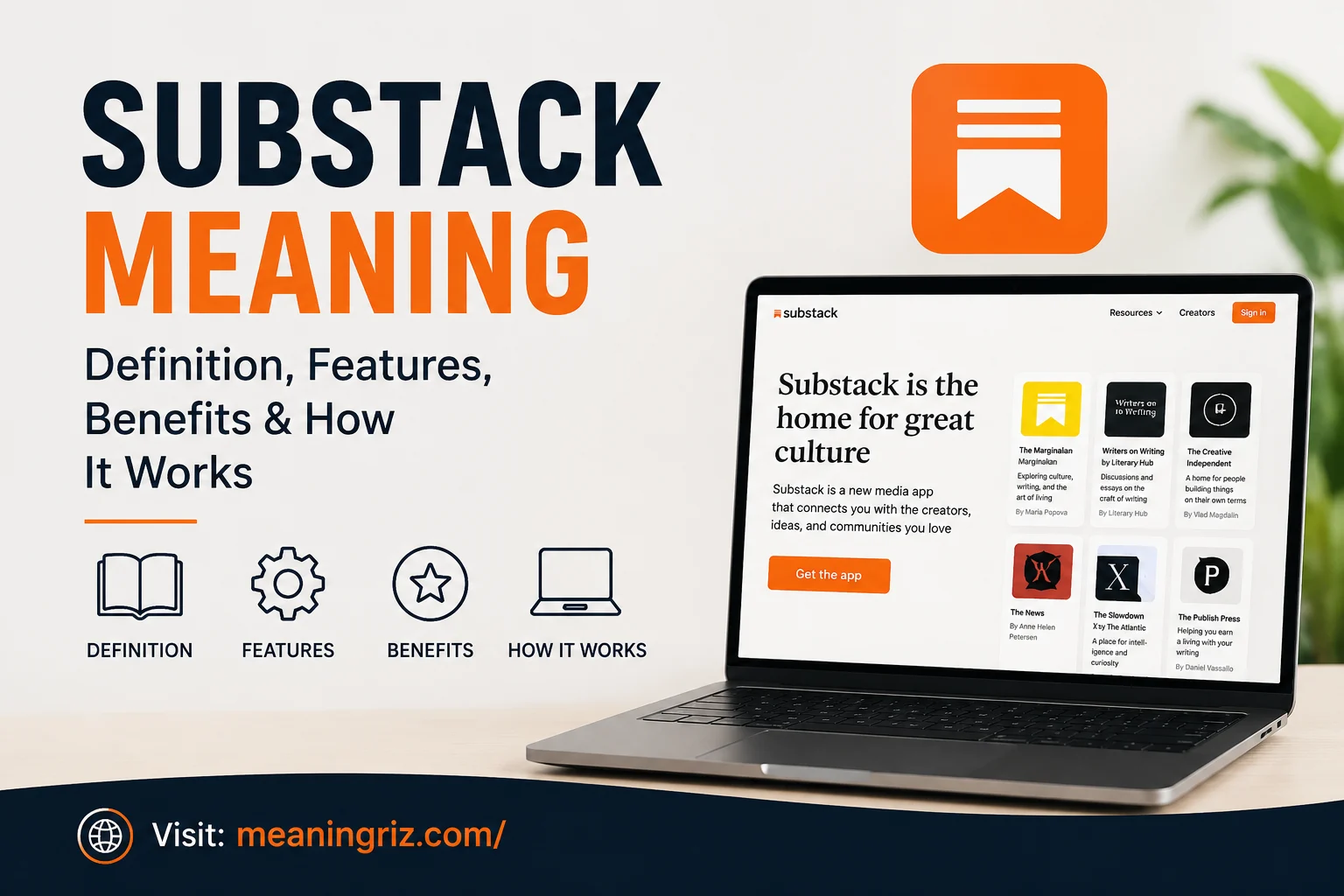
Have you ever heard someone say, “I publish my newsletter on Substack,” or seen a writer invite readers to “subscribe to my Substack”? If you’re wondering what that means, you’re not alone. As more journalists, authors, creators, and experts move away from traditional media, Substack has become one of the most talked-about publishing platforms.
Substack is more than just a website—it’s a place where writers can publish newsletters, build an audience, and even earn money directly from subscribers.
Featured Snippet Answer:
Substack is an online publishing platform that lets writers, journalists, and creators send newsletters by email and publish them on the web. Many creators use it to share free or paid content directly with their audience without relying on social media or traditional publishers.
What Does Substack Mean?
The term Substack refers to an online platform designed for publishing email newsletters and articles. It allows creators to write, send emails to subscribers, host a website for their posts, and offer paid subscriptions if they choose.
Unlike a traditional blog, Substack combines several tools into one platform:
- Email newsletter publishing
- Website hosting
- Subscriber management
- Payment processing
- Community features like comments and discussions
For readers, subscribing is as simple as entering an email address. For writers, it offers an easy way to reach an audience without needing advanced technical skills.
Where Does the Name “Substack” Come From?
Although the company hasn’t promoted an official detailed explanation of the name, most people understand Substack as a combination of two ideas:
- Sub – referring to subscriptions or subscribers.
- Stack – suggesting a collection or “stack” of written content, newsletters, or publications.
Together, the name reflects the platform’s focus on subscription-based publishing.
What Is Substack Used For?
People use Substack for many different purposes.
Common uses include:
- Publishing weekly newsletters
- Writing opinion pieces
- Sharing industry insights
- Teaching through educational content
- Posting personal essays
- Offering premium articles
- Sending podcast episodes
- Building an independent writing business
Today, you’ll find creators writing about nearly every topic imaginable—from technology and business to cooking, travel, politics, sports, and fiction.
How Does Substack Work?
One reason Substack has grown so quickly is its simplicity.
Here’s how it typically works:
1. A Creator Creates an Account
A writer signs up and creates a publication.
2. Readers Subscribe
Visitors can subscribe using their email address.
Some newsletters are completely free.
Others offer both free and paid memberships.
3. The Writer Publishes Content
Every new article is:
- Sent directly to subscribers by email.
- Published on the creator’s Substack website.
Readers can choose to read in their inbox or on the website.
4. Paid Subscribers Unlock Extra Content
Many creators offer premium articles, podcasts, community discussions, or exclusive newsletters for paying members.
Is Substack a Blog or a Newsletter?
This is one of the biggest points of confusion.
The answer is:
It’s both.
Unlike a traditional blogging platform, every post can also be delivered as an email newsletter.
Think of it like this:
| Platform | Website | Email Newsletter |
|---|---|---|
| WordPress | ✅ | Usually requires plugins |
| Medium | ✅ | Limited email features |
| Substack | ✅ | Built-in by default |
That’s one of the reasons many independent writers prefer it.
Who Uses Substack?
Substack attracts a wide variety of creators, including:
- Journalists
- Authors
- Bloggers
- Researchers
- Professors
- Financial analysts
- Business experts
- Hobby writers
- Podcasters
- Artists
Some publish occasionally as a hobby, while others earn a full-time income from paid subscriptions.
Why Has Substack Become So Popular?
In recent years, many creators have wanted more control over their work.
Instead of depending entirely on:
- Search engine traffic
- Social media algorithms
- Advertising revenue
they can build a direct relationship with readers through email.
Every subscriber becomes someone they can reach without worrying about changing algorithms on social platforms.
That direct connection is one of Substack’s biggest strengths.
Real-Life Example
Imagine you’re a travel writer.
Instead of posting only on social media, you start a Substack newsletter called Weekend Adventures.
Every Friday, subscribers receive:
- New travel stories
- Budget tips
- Destination guides
- Exclusive recommendations
Some readers enjoy the free version.
Others pay a monthly subscription for detailed travel itineraries and bonus content.
That’s a typical way creators use Substack today.
Free vs Paid Substack
One of the platform’s most attractive features is flexibility.
Free Publications
Readers receive:
- Regular newsletters
- Public articles
- Updates
No payment is required.
Paid Publications
Subscribers pay a monthly or yearly fee to access:
- Exclusive articles
- Private podcasts
- Member-only discussions
- Premium newsletters
- Bonus resources
Many creators use both options, giving away some content while reserving deeper insights for paying members.
How Writers Make Money on Substack
Substack allows creators to charge subscription fees directly.
Instead of relying on advertising, many writers earn income from loyal readers who value their work.
For example, a business expert might charge a monthly fee for exclusive market analysis, while a novelist could share members-only chapters of an upcoming book.
This subscription model gives creators more predictable income compared to advertising alone.
Why People Choose Substack (Psychology)
People don’t subscribe only because they want information.
They subscribe because they want a connection.
Email feels more personal than scrolling through endless social media posts.
Readers often feel they’re hearing directly from a writer rather than consuming content filtered by an algorithm.
For creators, that creates trust.
For readers, it creates a stronger sense of community and loyalty.
A Real Communication Observation
In real conversations, people often say:
- “I found it on Substack.”
- “She’s writing on Substack now.”
- “Subscribe to my Substack.”
Interestingly, most people use Substack almost like the name of a magazine or publication, even though it’s actually the platform behind the content.
Common Misunderstandings About Substack
Many new users assume:
“Substack is social media.”
Not really.
While readers can comment and interact, Substack focuses primarily on publishing and email newsletters.
“You must charge money.”
False.
Many of the most popular newsletters are completely free.
“Only professional journalists can use it.”
Anyone can create a Substack publication.
Students, hobby writers, teachers, photographers, and small business owners all use the platform.
Substack vs Other Publishing Platforms
| Feature | Substack | Medium | WordPress | Ghost |
|---|---|---|---|---|
| Email newsletters | ✅ Built-in | Limited | Plugin needed | ✅ Built-in |
| Paid subscriptions | ✅ Easy | Limited | Plugin required | ✅ Available |
| Website included | ✅ | ✅ | ✅ | ✅ |
| Beginner friendly | Excellent | Excellent | Moderate | Moderate |
| Best for | Newsletter businesses | Blogging | Full websites | Independent publishing |
Is Substack Right for You?
Substack works especially well if you:
- Want to grow an email audience.
- Publish regularly.
- Prefer writing over making videos.
- Want to monetize through subscriptions.
- Value owning your relationship with readers.
However, if you need a complex business website, online store, or advanced customization, platforms like WordPress may offer more flexibility.
Tips for New Substack Writers
If you’re just getting started:
- Pick a clear niche or topic.
- Publish consistently.
- Write in a conversational style.
- Offer useful, original insights.
- Encourage readers to subscribe.
- Mix free and premium content thoughtfully.
Building an audience takes time, but consistency often matters more than publishing every day.
Frequently Asked Questions
Is Substack free?
Yes. Creating a publication and offering free newsletters is free. If you enable paid subscriptions, the platform takes a percentage of subscription revenue.
Can anyone start a Substack?
Yes. You don’t need to be a professional writer or journalist to create a publication.
Do readers need an account?
Readers can subscribe with an email address. Having an account provides additional features, but reading many newsletters is simple.
Is Substack better than Medium?
They serve different purposes. Medium focuses on article discovery, while Substack emphasizes direct relationships with subscribers through email.
Can you make money on Substack?
Yes. Many creators earn income through paid subscriptions, although success depends on building an engaged audience and consistently delivering valuable content.
Is Substack only for writers?
No. Podcasters, educators, researchers, artists, coaches, and other creators also use Substack to share content and connect with their communities.
Final Thoughts
Substack has changed the way many creators publish online by combining a website, an email newsletter, and subscription tools into one easy-to-use platform. Whether you’re an experienced journalist, an aspiring author, or someone with a passion to share knowledge, it offers a simple way to build a loyal audience and communicate directly with readers.
For readers, subscribing to a Substack publication means receiving thoughtful content straight in their inbox. For creators, it means greater independence, stronger audience relationships, and new opportunities to earn from their work.
DISCOVER MORE ARTICLES
LDR Full Form in Chat Explained (Meaning, Usage & Examples)
Cameo Meaning Explained: All Definitions With Real Examples
ONS Meaning in Slang: What It Really Means & How It’s Used
Hoss Meaning: What It Really Means, Where It Came From & How to Use It
Merciful Meaning: Simple Definition, Examples, and Everyday Use

I’m the person behind this website, handling both the writing and content management myself. I focus on explaining word meanings, slang, and modern expressions in simple, clear language, using real-life examples so readers can understand how these terms are actually used in everyday conversations.