You were following the conversation just fine.
Then someone sent this — maybe mid-story, maybe in a group chat, maybe completely out of nowhere:
“onb that actually happened”
And something in your brain just… stopped.
Not because the sentence is complicated. Not because you missed something. But because those three letters are doing a thing you can’t quite put your finger on — and suddenly you’re not sure if this person is being genuinely serious, reacting dramatically, or swearing on something the way people do when they really, truly mean it.
Here’s everything you need, starting with the fast answer.
⚡ Quick Answer — Featured Snippet
What does ONB mean in text?
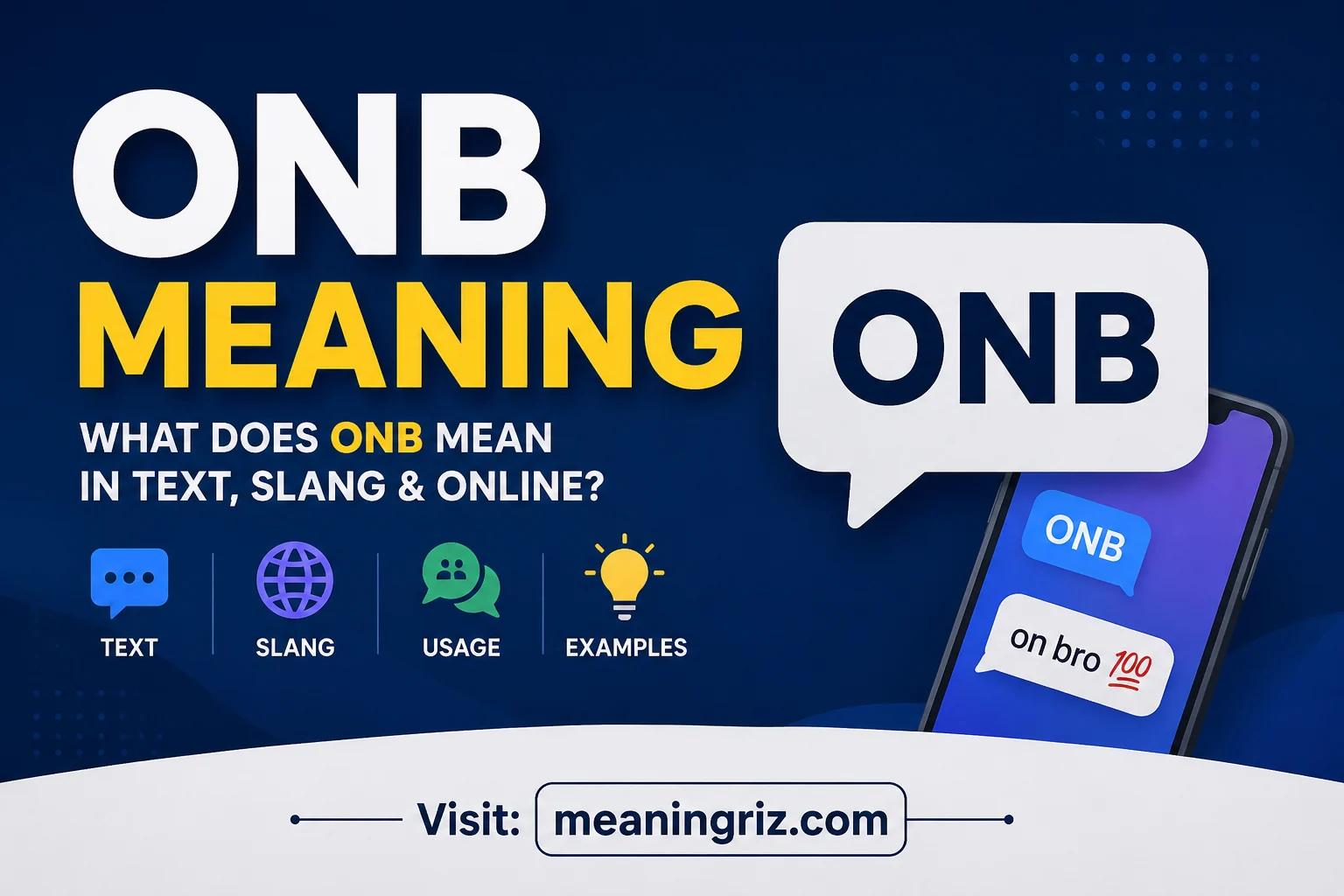
ONB stands for “On Bro” — a slang expression used to swear honesty, add strong emphasis, or vouch for something being true. It works like saying “I swear,” “I promise,” or “on everything” in casual texting. When someone sends “onb,” they’re not just making a statement — they’re staking their word on it. The tone can range from playful to genuinely intense depending on context, punctuation, and the conversation around it. It traces back to AAVE and Chicago street slang and spread widely through TikTok, Snapchat, and group chats. Less commonly, ONB can also stand for “On Blood,” though that usage is more regional and less frequent in everyday online conversation.
What Does ONB Mean in Text?
ONB means “On Bro.”
That’s the core meaning — the one behind roughly 90% of every “onb” you’ll see in a chat, a TikTok comment, a Snapchat streak, or a group message.
“On Bro” is a verbal oath. When someone says it, they’re essentially swearing on their brother — or on their person, their loyalty, their word. It’s the texting version of putting your hand up and saying “I’m telling you the truth right now.”
In practice it sounds like this:
- “onb that movie was actually fire” → I genuinely mean that
- “onb I had nothing to do with it” → I swear I’m being honest
- “onb she said that” → I’m not making this up
The literal meaning of the words matters less than the function — and the function is always the same: to make what you just said feel more real, more credible, more weighted.
All the Meanings of ONB (Ranked by How Often You’ll See Them)
ONB as “On Bro” — The Main Meaning
This is the one. If someone sends you “onb” in a casual chat, this is almost certainly what they mean. It functions identically to “on God,” “on everything,” or “I swear” — just shorter and rooted in a specific slang tradition.
The phrase works whether someone is:
- Confirming a wild story that sounds unbelievable
- Defending themselves in a disagreement
- Reacting to something genuinely surprising
- Showing they’re dead serious about something casual
One important note: despite the word “bro,” people of all genders use ONB freely. It’s not a gendered term in practice — it’s simply a way to swear sincerity.
ONB as “On Blood” — Regional, Less Common
In some communities — particularly ones where “blood” is used as a term of loyalty or brotherhood — ONB can stand for “On Blood.” The meaning is functionally the same as “On Bro”: a sincere oath that what you’re saying is true. But this version carries heavier cultural weight and is more specific to certain regional slang traditions.
If you see “ONB” outside of casual internet texting — particularly in conversations where cultural context or loyalty is being emphasized — this meaning may be what’s intended. In general online slang? “On Bro” is almost always the safer read.
ONB in Professional Contexts — Rare, Different Meaning
In formal or workplace writing, ONB occasionally appears as an abbreviation for “Onboarding” — as in, employee onboarding processes. If someone in a work Slack or HR email uses “ONB,” they almost certainly don’t mean “On Bro.” Context switches the meaning completely here.
This is the most common mistake people make when they first encounter ONB: applying the slang meaning to a professional context, or vice versa. The setting tells you which one you’re reading.
Where ONB Actually Comes From
ONB didn’t appear out of nowhere. It traces back to <cite index=”12-1″>AAVE (African American Vernacular English) and Chicago street slang</cite>, where swearing “on” someone — a brother, a loved one, a set — was a real, meaningful declaration of honesty.
<cite index=”12-1″>Phrases like “On Folk” and “On God” follow the same pattern</cite> — all expressions used to vouch for the truth of what you’re saying by putting something you value on the line. “On Bro” shortened that into a text-friendly three letters, and <cite index=”12-1″>it spread through younger communities on social media platforms, particularly Snapchat and TikTok.</cite>
Understanding where it came from matters, because it explains why ONB feels more serious than just saying “honestly” or “for real.” Even in casual texting, the phrase carries a trace of its original weight — a promise backed by something.
How ONB Actually Feels in a Conversation
This is where most explanations stop too early. ONB isn’t one-note. The same three letters shift in emotional intensity depending on exactly how they’re used.
“onb” — Casual, Emphasizing a Point
Lowercase, attached to a sentence, no extra energy around it. This is the most common version and the most relaxed. The person is adding emphasis, not drama. They genuinely mean what they said and want you to know it — but nobody’s getting emotional here.
“onb this is the best pizza I’ve ever had”
“ONB” or “ONB!!” — Heightened, More Intense
All caps or with punctuation signals the emotional temperature has gone up. This isn’t casual emphasis anymore — this is someone who really needs you to believe them, or who is genuinely reactive to something. It can tip into defensive territory if the conversation already had tension in it.
“ONB I did not say that, you got it wrong”
“onb 💀” or “onb no way” — Playful, Reactive
When ONB comes with a skull emoji or gets paired with “no way” or “I can’t,” it’s shifted fully into reaction mode. This is less about swearing honesty and more about expressing that something shocked, amused, or overwhelmed them. The slang root is still there, but the vibe is playful rather than serious.
“onb 💀 she actually said that to his face”
“onb bro” — Extra Emphasis, Slightly Frustrated
Pairing ONB with “bro” (the very word it stands for) might seem redundant, but in texting it works as an intensifier — like saying “I’m being serious, seriously.” It often shows up when someone has already said something once and feels like they’re not being believed.
“onb bro I already told you I was there”
Real Chat Examples (How It Actually Shows Up)
In a Friend Group, Reacting to Wild News
Kai: she got expelled for that? Jordan: onb, I heard it from like three people Kai: no way
ONB here is vouching for the reliability of the information. Jordan is saying: this isn’t a rumour I half-heard — I’m putting my word on it.
When Someone Isn’t Being Believed
You: I finished the whole project in one night Them: no you didn’t lol You: onb I did, check the timestamp
The defensive use. ONB steps in when words alone aren’t landing and the person needs to escalate to an oath.
Pure Reaction to Something Surprising
“onb 😭 that was the funniest thing I’ve seen all week”
No conversation needed before this — it’s a standalone emotional reaction. The ONB is just adding weight to how genuinely they felt it.
In a TikTok Comment
“onb this tutorial changed my life”
Hyperbolic, playful, but still sincere in its own way. TikTok culture uses ONB to make reactions feel more personal and less like generic engagement.
When Confirming Plans or a Promise
Them: you’re actually coming right? You: onb I’ll be there at 8
A promise. The person is staking their word that they’ll follow through. More meaningful than just “yeah.”
ONB Across Platforms — Does It Change?
The meaning stays the same everywhere. The intensity and frequency shift by platform.
ONB on Snapchat
<cite index=”12-1″>On Snapchat, ONB is extremely popular among Gen Z users</cite> in private chats and streaks. It’s used casually and constantly — less as a dramatic oath and more as a verbal habit that signals sincerity in a platform where messages disappear and conversations move fast.
ONB on TikTok
TikTok is where ONB lives loudest. It shows up in comments reacting to videos, in captions adding personal weight to a confession or opinion, and in duets where someone is responding to content emotionally. The playful + skull emoji combo lives here most naturally.
ONB on Instagram
In DMs it functions like regular texting — sincere, casual emphasis. In comments it tends to be more performative, used to show strong genuine reaction to a post or Reel.
ONB in Group Chats
Group chats are probably the most natural habitat for ONB. Someone shares a story, someone else doesn’t believe it, ONB shows up to settle the debate. It works as both confirmation and social bonding — “you can trust me in front of everyone.”
ONB in Regular Texting
The most personal version. When someone texts you ONB one-on-one, it tends to carry the most weight because there’s no audience — it’s just between you two. This is where ONB as a genuine pledge of honesty feels most real.
When to Use ONB — And When to Skip It
When ONB Works Naturally
- Texting close friends who already use this kind of slang
- Reacting to something genuinely surprising or funny
- Defending yourself in a light disagreement
- Vouching for a story or piece of information
- Expressing strong agreement with something someone said
When to Leave ONB Out
- Any professional, school, or formal communication — it will read as either confusing or deeply unprofessional
- Conversations with people significantly older than you who aren’t familiar with current slang
- Serious emotional conversations where casual slang can make sincerity feel performative
- First messages to someone you don’t know well — it can feel like cultural overclaiming if the other person isn’t in the same slang space
The practical test: would you say “on bro” out loud to this person in real life? If the answer is yes without hesitation, “onb” fits. If you’d feel the need to explain it, skip it.
Is ONB Rude or Offensive?
Not inherently. ONB is casual slang, not profanity, and it doesn’t carry any slur or insult in itself.
That said, a few things can make it land badly:
It can feel aggressive when the conversation is already tense. If someone sends “ONB I’m not doing that” all caps in a disagreement, the oath-like quality of the phrase can read as confrontational even when the intent was just emphasis.
It can feel culturally out of place when used by someone who isn’t connected to the slang’s roots. ONB comes from a specific cultural tradition, and using it without understanding where it came from can occasionally come across as forced or tone-deaf — though in casual digital spaces, most people won’t notice or care.
Between friends who naturally use this language, it’s never rude. It’s basically the same as saying “I promise” — just shorter and more casual.
Why People Use ONB — The Psychology Behind It
Swearing has always existed in language because stating something isn’t always enough. When you need someone to believe you — really believe you, not just hear you — you add weight. You invoke something. You stake a claim.
ONB is the digital shorthand for exactly that impulse. The slang is doing what oaths have always done: turning a statement into a social contract.
It’s used most when the stakes of being disbelieved feel real. When someone tells a story that sounds unbelievable and drops “onb,” they’re preemptively defending their credibility. They know it sounds wild. The ONB is their way of saying: I know you might not believe this, but I need you to know I’m not making it up.
It also signals in-group membership. Using ONB correctly — in the right moment, with the right energy — communicates that you’re fluent in a particular communication culture. People who grew up around this slang use it naturally. People who picked it up from TikTok might use it slightly more deliberately. Most people in the conversation can feel the difference, even if they can’t explain why.
One real observation: ONB is almost never used for something boring. You wouldn’t say “onb I had cereal for breakfast.” The phrase gets reserved for moments with emotional charge — surprise, disbelief, intensity, or the feeling that something important needs to land. That selectivity is part of what gives it weight.
A Common Mistake People Make
The biggest misread is taking ONB as a sign that someone is angry or being dramatic when they’re actually just enthusiastic.
All-caps “ONB” can read as heated if you’re not used to the person’s texting style, but for a lot of people, capitalizing slang is just how they show excitement — not hostility. Read the words around it before deciding on tone. If everything else in the message is light and normal, the ONB probably is too.
The second mistake is using ONB in a serious, emotional conversation trying to sound sincere. In those moments, slang can undercut genuine feeling — “onb I’m really sorry” hits differently than “I’m genuinely sorry.” Sometimes sincerity needs full sentences, not shortcuts.
ONB vs. Similar Texting Slang
ONB sits in a specific category of slang — oath-style expressions that add weight to a statement. Here’s how it compares to the most similar terms:
| Term | Stands For | Core Meaning | Tone | Intensity | Best Used When |
|---|---|---|---|---|---|
| ONB | On Bro | I swear / I promise | Casual to intense | Medium–High | Vouching for truth, reacting strongly |
| ONG | On God | I swear to God | Similar to ONB, slightly more solemn | High | Same as ONB, slightly heavier weight |
| FR | For Real | Seriously / genuinely | Light to medium | Low–Medium | General emphasis, agreement |
| NGL | Not Gonna Lie | Honestly speaking | Self-aware, slightly vulnerable | Low | Admitting something genuine |
| ISTG | I Swear to God | Serious oath | Urgent, intense | Very High | Last resort — when you really need to be believed |
| BET | — | Agreed / confirmed | Confident, energetic | Medium | Sealing a plan or agreement |
The key distinction worth knowing: ONB and ONG do the same job, but ONB tends to feel slightly more casual and street-culture rooted, while ONG has spread more broadly into mainstream Gen Z usage. Both are oath-style slang — the choice between them is often just habit and which one the person grew up hearing.
How to Respond When Someone Texts You “ONB”
Believing Them — Simple Acknowledgment
“omg fr?? that’s wild”
Accepts the sincerity, matches the energy, keeps things moving.
Showing You’re Convinced
“okay okay I believe you lol”
Playful acknowledgment that the ONB worked — you’re persuaded.
Matching Their Energy
“onb same though, that actually got me”
Mirrors the slang back, creates a shared moment. Works best when you genuinely feel the same way.
Gently Pushing Back (If You Still Don’t Believe Them)
“bro onb or cap 💀”
Friendly challenge. You heard the oath but you’re still skeptical — and you’re being lighthearted about it.
When You’re Not Sure What They Mean
“wait are you being serious rn or”
Simple, honest, no need to pretend you understood the tone. Most people will clarify immediately.
Frequently Asked Questions
What Does ONB Mean in Text?
ONB means “On Bro” — a slang expression used to swear honesty, add emphasis, or show genuine sincerity. It’s similar to saying “I swear,” “I promise,” or “on everything.” When someone texts ONB, they’re putting their word behind whatever they just said.
Is ONB the Same as ONG?
They’re very similar. Both are oath-style expressions used to swear the truth of a statement. ONG (“On God”) has spread more widely into general Gen Z slang, while ONB (“On Bro”) tends to feel slightly more casual and community-specific. In practice, most people use them interchangeably.
Can ONB Mean “On Blood”?
Yes, in some regional and community-specific contexts. “On Blood” carries the same meaning — a sincere oath — but is more culturally specific and less common in mainstream internet slang. In most casual online conversations, “On Bro” is the intended meaning.
Is ONB Rude?
No, ONB is not rude or offensive by itself. It’s casual slang used between friends. It can feel aggressive if the conversation is already tense and someone uses it defensively, but the word itself carries no insult.
Should I Use ONB in Professional Settings?
No. In work emails, school messages, or any formal communication, ONB reads as either confusing or unprofessional. Use full words — “I promise,” “I can confirm,” or “to be honest” — in those contexts.
Why Do People Say “On Bro” When Swearing?
It’s part of a long tradition in spoken language of swearing “on” something or someone as a show of sincerity. Swearing on a person you’re loyal to turns a statement into a personal pledge. “On Bro” adapted that tradition into a quick, texting-friendly phrase that still carries the emotional weight of the original gesture.
The Bottom Line
ONB means “On Bro” — and what that really means is: trust me on this one. It’s a slang oath, not just an abbreviation. When someone sends it, they’re not filling space — they’re vouching. Whether the moment is heavy or playful depends on everything around the word: the conversation, the relationship, the punctuation, the emoji next to it.
Once you hear the original impulse behind it — the need to make something land as true — ONB stops feeling like random letters and starts sounding exactly like what it is: someone putting their word on the table.
Related Articles
LMR Meaning: What It Means in Text, Snapchat, TikTok, and Online (2026 Guide)
Chuzz Meaning: What It Means in Slang, Text, and Social Media
Skank Meaning: What It Really Means, Is It Offensive, and How People Use It Today
IMK Meaning in Text: What It Really Means & How to Reply
ALR Meaning in Text: What It Really Means & How to Reply